
Head & Neck Cancer Awareness Month: Early Signs of Oral Cancer You Should Never Ignore
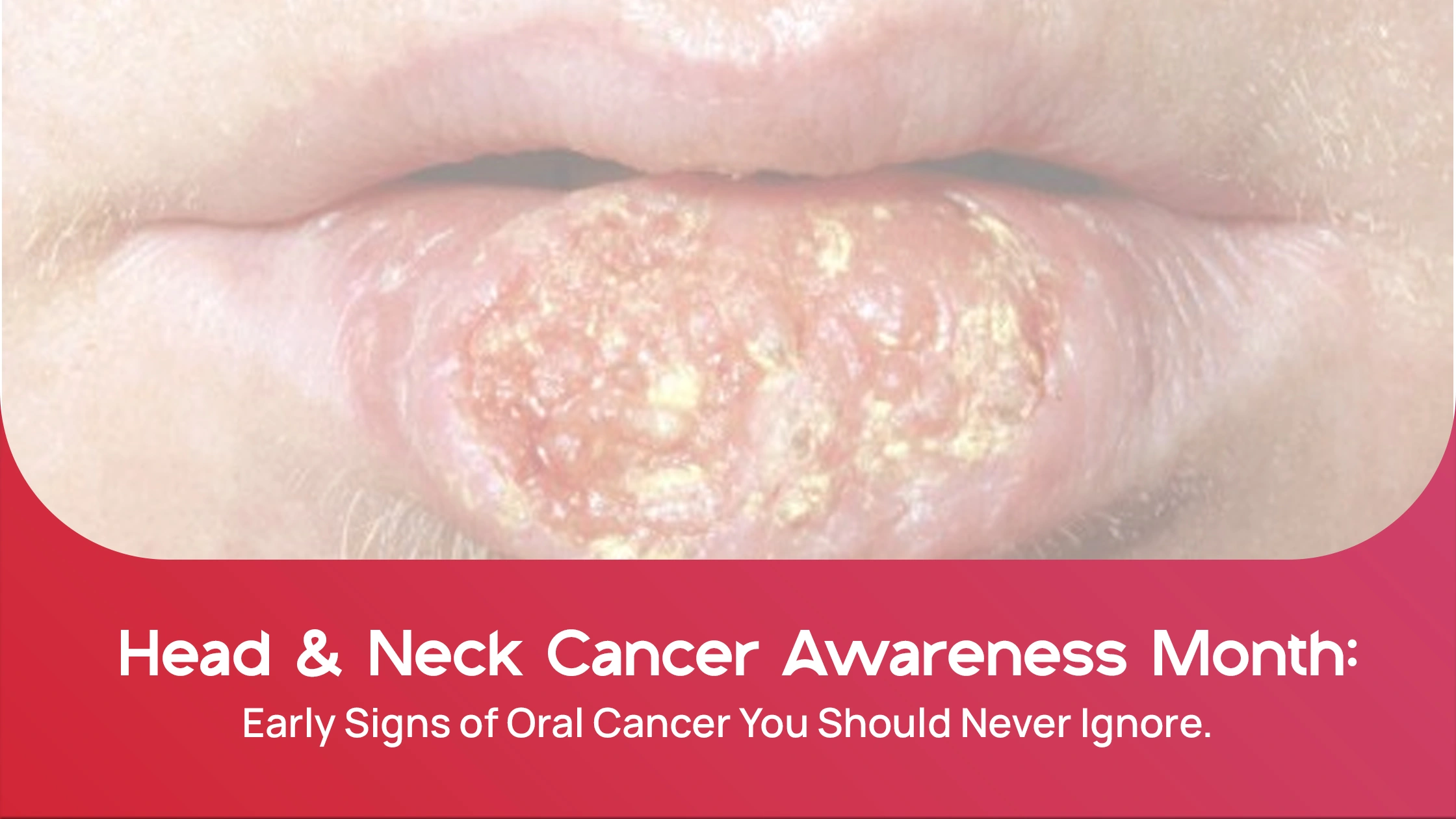
Every year, April is observed globally as Head & Neck Cancer Awareness Month. The objective is simple but extremely important — to spread awareness about oral cancer, throat cancer, and other head & neck cancers, and to encourage early detection and timely treatment.
Among these, oral cancer (mouth cancer) is one of the most common cancers in India. Unfortunately, many patients still reach doctors when the disease has already progressed to an advanced stage. The biggest reason? Early symptoms are often ignored or mistaken for common mouth problems.
Understanding the early warning signs of oral cancer can help individuals seek medical attention sooner — significantly improving treatment outcomes.
Why Early Detection of Oral Cancer Matters
Like most cancers, oral cancer is far easier to treat when detected early.
Early-stage treatment often involves:
- Smaller surgeries
- Faster recovery
- Better preservation of speech and swallowing
- Improved cosmetic outcomes
- Higher chances of complete cure
In contrast, late-stage diagnosis may require:
- Larger surgeries
- Reconstruction procedures
- Radiation therapy or chemotherapy
- Longer rehabilitation
This is why awareness and regular screening play a crucial role in oral cancer prevention and treatment.
Common Risk Factors for Oral Cancer
Certain lifestyle habits and medical conditions increase the risk of developing mouth cancer.
Major risk factors include:
- Tobacco chewing (gutkha, paan, khaini, supari)
- Cigarette or bidi smoking
- Excessive alcohol consumption
- Poor oral hygiene
- Chronic irritation from sharp teeth or dentures
- Human Papillomavirus (HPV) infection
- Previous history of oral lesions or precancerous conditions
Individuals with these risk factors should be especially alert to changes in the mouth or throat.
Early Signs of Oral Cancer You Should Never Ignore
Many early symptoms of mouth cancer appear mild at first. However, if they persist for more than two to three weeks, medical evaluation becomes essential.
Some of the most common warning signs include:
1. A Mouth Ulcer That Does Not Heal
Most mouth ulcers heal within 7–10 days.
An ulcer that persists for more than 2–3 weeks may require examination by a specialist.
2. White or Red Patches Inside the Mouth
These patches may appear on the:
- Tongue
- Inner cheek
- Floor of the mouth
- Gums
Such patches may represent precancerous conditions like leukoplakia or erythroplakia.
3. A Lump or Thickened Area in the Mouth
A small lump in the cheek, tongue, or jaw should not be ignored, especially if it gradually increases in size.
4. Difficulty Opening the Mouth
Restricted mouth opening may indicate oral submucous fibrosis, a condition strongly linked with tobacco chewing and associated with oral cancer risk.
5. Pain While Chewing or Swallowing
Persistent pain in the mouth, jaw, or throat during eating can be a warning sign.
6. Unexplained Bleeding in the Mouth
Bleeding without injury, especially from the tongue or gums, may require investigation.
7. A Persistent Lump in the Neck
Sometimes, the first sign of oral cancer is a swollen lymph node in the neck caused by cancer spread.
Who Should Consider Oral Cancer Screening?
Regular oral cancer screening is recommended for individuals who:
- Use tobacco in any form
- Consume alcohol frequently
- Have a history of precancerous oral lesions
- Notice any persistent mouth symptoms
- Have family members with oral cancer
Screening involves a simple visual and physical examination of the mouth and neck by a trained specialist.
Can Oral Cancer Be Prevented?
While not all cancers are preventable, several lifestyle changes can significantly reduce the risk:
- Avoid tobacco in all forms
- Limit alcohol consumption
- Maintain good oral hygiene
- Visit a dentist or specialist for regular oral examinations
- Seek medical attention for persistent mouth symptoms
Awareness remains the most powerful tool in preventing advanced oral cancer.
Final Thoughts
Head & Neck Cancer Awareness Month serves as an important reminder that early signs of oral cancer should never be ignored. Many of these symptoms appear simple, but timely medical consultation can make a life-changing difference.
Recognizing warning signs early, undergoing regular screening, and seeking expert evaluation when needed can help ensure better outcomes and improved quality of life for patients.
Disclaimer
This blog is intended for educational purposes only. Readers should not treat this information as medical advice for their condition. It is very important that an in-person consultation be conducted with an expert before taking any medication or treatment.