
How to Perform a Breast Self-Examination (BSE): Step-by-Step Guide to Checking Your Breasts at Home?
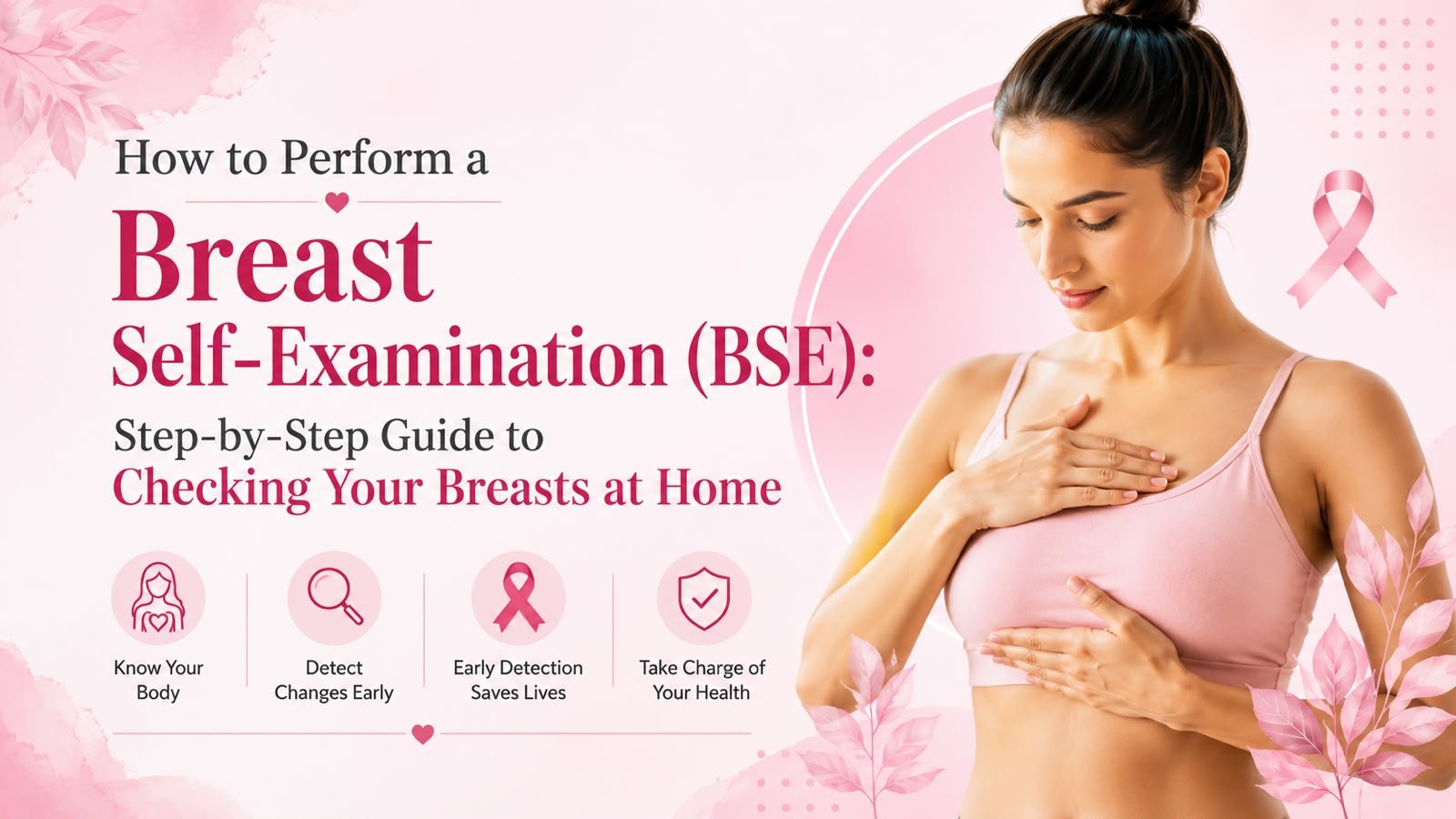
When it comes to breast cancer, early detection can make a significant difference. While regular clinical examinations and recommended screening tests remain essential, becoming familiar with your own breasts is one of the simplest ways to notice changes early. Breast self-examination (BSE) is not meant to diagnose breast cancer, but it can help you recognize anything unusual and seek timely medical evaluation. At i-BOCC Care, we believe that breast cancer awareness begins with knowing your body because noticing a change early is often the first step toward getting the right care.
What Is Breast Self-Examination?
Breast self-examination (BSE) is a simple method of checking your breasts regularly to become familiar with their normal look and feel. Its purpose is to help you identify any new or unusual changes that may require further breast cancer evaluation by a healthcare professional.
A breast self-examination may help you notice:
- A new lump or thickened area in the breast or underarm
- Changes in breast size or shape
- Skin dimpling, puckering, or thickening
- A nipple that has recently turned inward
- Unusual nipple discharge, especially if bloody
- Persistent pain in one specific area
- Redness, swelling, or other skin changes
It’s important to remember that not every breast change is cancer, and many breast lumps are non-cancerous. However, any new or persistent change should never be ignored and should be evaluated promptly by a breast specialist for an accurate diagnosis.
Why Is Breast Self-Examination Important?
Many women discover breast changes themselves before they are noticed during routine check-ups.
Regular self-examination helps you:
Become Familiar with Your Breasts
Every woman’s breasts are different. Monthly checks help you understand your normal breast texture and appearance.
Detect Changes Early
Finding a change early often leads to quicker diagnosis and better treatment outcomes.
Take Charge of Your Health
Breast self-awareness empowers women to actively participate in their own healthcare journey.
Reduce Anxiety Through Awareness
Knowing what is normal for your body can prevent unnecessary worry and help you respond appropriately when changes occur.
When Should You Perform a Breast Self-Examination?
For women who menstruate, the best time is:
5–7 2-3 days after your periods ends
During this time, hormonal changes are minimal, and the breasts are usually less tender or swollen. For women who have reached menopause:
Choose a specific day each month—such as the 1st or 15th—and perform your self-exam consistently on that day. Consistency is more important than perfection.
When Should You Perform a Breast Self-Examination?
- Women over 20 years can become familiar with their breasts.
- Women with a family history should be particularly aware of breast changes.
- Men do not routinely perform BSE, but should seek evaluation for any persistent breast lump or nipple changes.
Step-by-Step Guide to Breast Self-Examination
A proper breast self-exam involves both looking and feeling.
Step 1: Look at Your Breasts in the Mirror
Stand in front of a mirror with your shoulders straight and arms relaxed by your sides.
Look for:
- Changes in size or shape
- Visible swelling
- Skin dimpling or puckering
- Redness or rash
- Nipple changes or inversion
Now raise both arms above your head and look again.
Finally, place your hands on your hips and press firmly to tighten your chest muscles while observing any changes.
Step 2: Check for Nipple Changes
Gently examine each nipple.
Look for:
- New inversion
- Scaling or crusting
- Unusual discharge
- Bleeding
Any discharge that occurs without squeezing should be evaluated by a healthcare professional.
Step 3: Feel Your Breasts While Standing or Showering
Many women find this easiest while showering because wet skin allows fingers to move smoothly.
Using the pads of your three middle fingers:
- Keep fingers flat
- Move in small circular motions
- Cover the entire breast area
- Apply light, medium, and firm pressure
Follow a pattern and stick to it each month.
You can move:
- In circles from the nipple outward
- Up and down in rows
- In wedge-shaped sections from the nipple outward
Any method works as long as the entire breast is examined.
Step 4: Check the Underarm Area
Breast tissue extends into the underarm.
Feel for:
- Lumps
- Swelling
- Thickened areas
Do not skip this step, as some breast-related changes can appear here first.
Step 5: Feel Your Breasts While Lying Down
Lie on your back and place a pillow under your right shoulder.
Put your right arm behind your head.
Using your left hand, examine your right breast using small circular motions.
Repeat on the opposite side.
This position spreads breast tissue evenly and may help you feel changes more clearly.
What Should a Lump Feel Like?
This is one of the most common questions women ask.
A breast lump may feel:
- Hard or firm
- Different from surrounding tissue
- Fixed or movable
- Painless or painful
Not all breast cancers present as lumps, and not all lumps are cancerous.
The key is to look for anything that feels new or different from your usual breast tissue.
What Should a Lump Feel Like?
Normal breasts commonly have:
- Different sizes
- Nodular areas
- Cyclical tenderness
- Areas that feel firmer before periods
Knowing what is normal helps reduce unnecessary anxiety.
What Changes Should Never Be Ignored?
Contact a breast specialist if you notice:
- A new lump
- Persistent swelling
- Skin dimpling or puckering
- Nipple discharge, especially bloody discharge
- Sudden nipple inversion
- Changes in breast size or shape
- Redness that does not improve
- Persistent breast pain in one area
Most breast changes turn out to be benign, but professional evaluation is always recommended.
Many authorities now emphasise breast self-awareness rather than a strict monthly examination. The goal is to become familiar with your normal breast appearance and feel, so that any new change can be recognised promptly.
I found a lump. What should I do?
- Do not panic.
- Most breast lumps are not cancer.
- However, any new breast lump should be evaluated by a breast specialist.
- Assessment may include
- Clinical breast examination
- Ultrasound
- Mammography (where appropriate)
- Needle biopsy if required
Common Myths About Breast Self-Examination
Myth 1: If I Do BSE, I Don’t Need Mammograms
False.
Breast self-examination does not replace screening mammograms or clinical breast examinations.
Myth 2: Breast Cancer Always Causes Pain
False.
Breast cancers are almost always painless, especially in the early stages.
Myth 3: Young Women Don’t Need to Check Their Breasts
False.
Women of all ages should be familiar with their breasts and report unusual changes.
Myth 4: Every Lump Means Cancer
False.
Many breast lumps are benign conditions such as cysts or fibroadenomas.
The Bottom Line
Breast self-examination / Breast Self-Awareness is not about creating fear—it is about creating awareness.
Spending just a few minutes each month checking your breasts can help you become more confident about your health and more alert to changes that may require medical attention.
Early detection remains one of the most powerful tools in the fight against breast cancer. While breast self-examination is only one part of a complete breast health strategy, it is a simple habit that can make a meaningful difference.
Know your normal. Trust your instincts. And if something feels different, don’t ignore it—get it checked.
Disclaimer
Readers should not treat any information in this blog as medical advice for their condition. It is very important that an in-person consultation be conducted with an expert before taking any medication or treatment