
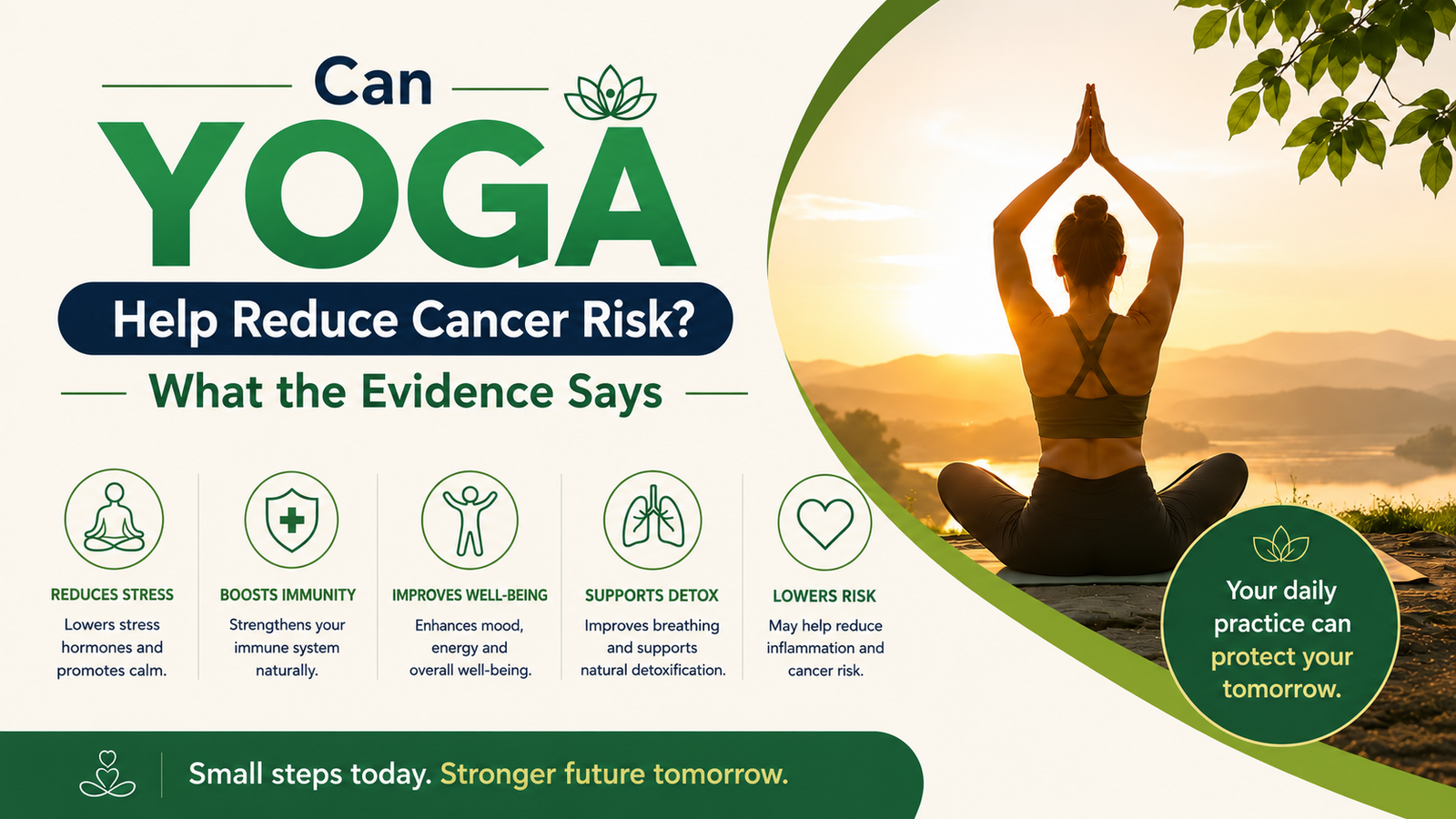
Can Yoga Help Reduce Cancer Risk? What the Evidence Says
Most of us think about health in the same way.
We wait for Monday.
We wait for the New Year.
We wait until life becomes less busy.
But good health rarely comes from one dramatic decision. More often, it is built through small habits repeated consistently over time.
The morning walk you almost skipped.
The extra hour of sleep.
The healthier meal.
The decision not to smoke.
The few minutes you spend practising yoga.
These choices may seem ordinary, but together they shape your long-term health.
One question we hear surprisingly often at i-BOCC Care is:
"Doctor, should I start doing yoga to prevent cancer?"
The answer is simple.
Yoga is a wonderful habit for overall health—but it is not a treatment for cancer, and it cannot prevent cancer on its own. However, when practised regularly as part of a healthy lifestyle, yoga may contribute to reducing the risk of certain cancers while improving physical and emotional wellbeing. That is where yoga truly fits.
Can Yoga Prevent Cancer?
No.
There is no single food, exercise, vitamin or supplement that can prevent cancer.
Cancer develops because of many factors, including:
- Age
- Genetics
- Environment
- Lifestyle
- Tobacco and alcohol exposure
- Body weight
- Physical activity
- Chance
The encouraging news is that many of these risk factors can be modified.
Yoga is one of several healthy habits that can support better long-term health—but it should always complement, never replace, regular health check-ups, cancer screening and evidence-based medical care.
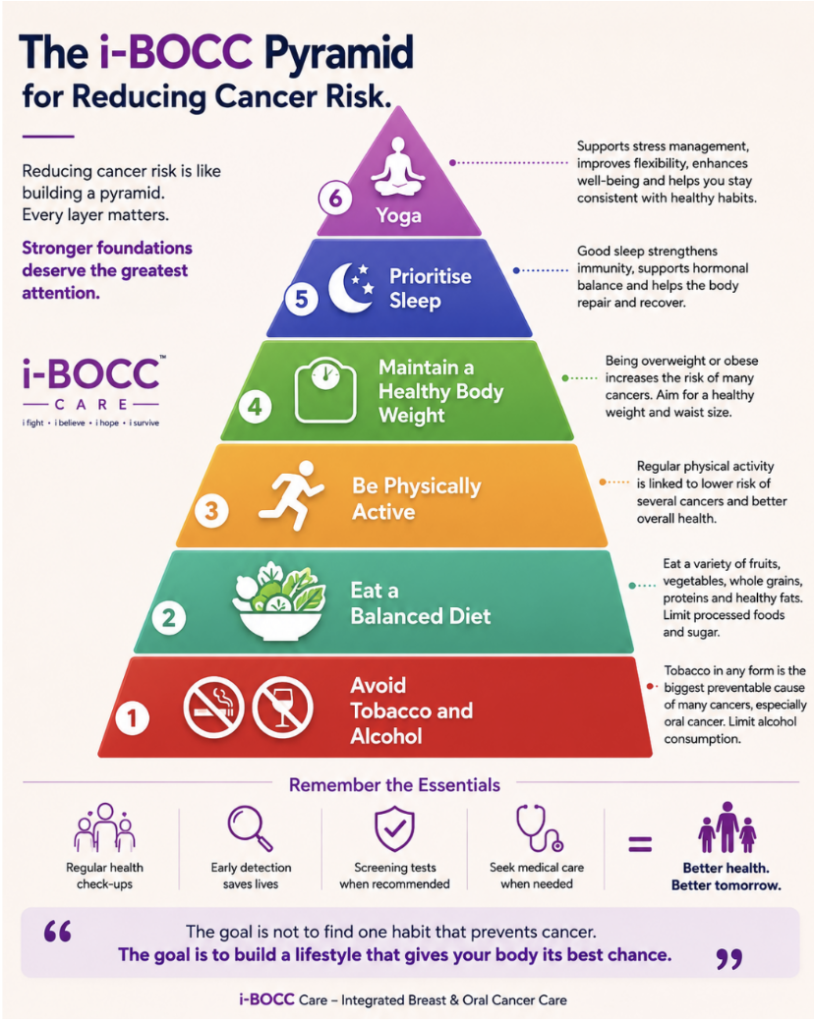
Yoga is not at the top because it is less important.
It is there because it supports many of the healthy habits below it and helps people stay consistent over the long term.
How Can Yoga Support Better Health?
Yoga offers benefits that go far beyond flexibility.
While it does not directly prevent cancer, it may encourage habits that contribute to better overall health.
Regular Physical Activity
People who enjoy yoga are often more likely to stay physically active over many years.
Consistency matters far more than intensity.
Stress Management
Stress itself has not been proven to cause cancer.
However, chronic stress can affect sleep, eating habits, physical activity and emotional wellbeing.
Yoga combines movement, breathing and mindfulness, helping many people feel calmer and more balanced.
Better Sleep
Many people who practise yoga regularly report better sleep quality and improved energy levels.
Good sleep supports overall health and makes it easier to maintain healthy routines.
Healthier Lifestyle Choices
One healthy habit often leads to another.
People who practise yoga regularly frequently become more aware of:
- Daily movement
- Nutrition
- Hydration
- Sleep
- Stress management
Feeling better often encourages better decisions.
Yoga and Breast Cancer
For breast cancer, maintaining a healthy body weight and staying physically active are associated with a lower risk of postmenopausal breast cancer.
Yoga can contribute by encouraging regular movement, improving flexibility and supporting emotional wellbeing.
Its role becomes even more relevant after treatment.
Many women recovering from breast cancer surgery experience:
- Shoulder stiffness
- Fatigue
- Disturbed sleep
- Anxiety
- Reduced confidence in returning to normal life
Appropriately guided yoga may help improve mobility, sleep and overall quality of life.
At the ASCO 2026 Annual Meeting, researchers highlighted that structured yoga programmes helped many cancer survivors improve sleep, reduce fatigue and enhance emotional wellbeing. Importantly, the discussion was not about curing cancer—it was about helping people recover and live better after treatment.
If you have recently undergone breast surgery or reconstruction, always discuss returning to exercise with your treating surgeon before beginning yoga.
Yoga and Oral Cancer
When it comes to oral cancer, one message deserves to be remembered above everything else:
No amount of yoga can cancel the harmful effects of tobacco.
Stopping smoking, chewing tobacco and areca nut (supari) remains one of the most effective ways to reduce the risk of oral cancer.
Yoga cannot reverse the damage caused by tobacco.
However, it may support healthier habits, improve overall wellbeing and become a useful part of rehabilitation after treatment through gentle stretching, breathing exercises and relaxation techniques.
The i-BOCC Care Philosophy
Patients often ask us,
“Doctor, what is the one thing I should do to avoid cancer?”
We wish there were one simple answer.
There isn’t.
Instead, we encourage people to build a lifestyle that supports long-term health.
- Stop tobacco.
- Maintain a healthy body weight.
- Stay physically active.
- Eat well.
- Sleep well.
- Attend recommended screening tests.
- Manage stress.
And if yoga helps you stay consistent with those habits, then it has already done something valuable.
Across Chhatrapati Sambhajinagar, Jalna, Beed, Parbhani, Nanded, Hingoli, Latur, Dharashiv and surrounding districts, many people ask whether lifestyle changes alone can prevent cancer.
Our answer is always the same:
Healthy habits reduce cancer risk. They do not eliminate it.
Common Myths About Yoga and Cancer
Myth: Yoga prevents cancer.
Fact: No. Yoga may contribute to reducing cancer risk as part of a healthy lifestyle, but it cannot prevent cancer by itself.
Myth: Yoga can cure cancer.
Fact: No. Cancer requires evidence-based medical treatment. Yoga may support wellbeing during and after treatment but should never replace medical care.
Myth: If I practise yoga, I don’t need mammography or cancer screening.
Fact: Screening tests and yoga serve completely different purposes. Regular screening remains essential.
Myth: Stress causes cancer.
Fact: Stress alone has not been proven to cause cancer. However, managing stress supports better physical and emotional health.
Myth: Yoga can undo the harmful effects of tobacco.
Fact: No. The most effective way to reduce the risk of oral cancer is to stop using tobacco in every form.
Frequently Asked Questions (FAQs)
Can yoga reduce the risk of cancer?
Yoga may contribute to reducing the risk of certain cancers by encouraging regular physical activity, healthier lifestyle habits and stress management. It should always be viewed as one part of an overall healthy lifestyle.
Is yoga useful after cancer treatment?
For many patients, appropriately guided yoga may improve flexibility, sleep, fatigue and emotional wellbeing. Always discuss returning to exercise with your treating team.
Which type of yoga is best for beginners?
Gentle stretching, restorative yoga, breathing exercises and beginner-friendly sessions are usually good places to start.
Should yoga replace cancer treatment?
No. Yoga complements evidence-based medical care but should never replace surgery, chemotherapy, radiotherapy or any treatment recommended by your oncology team.
Is yoga more important than stopping tobacco?
No. Avoiding tobacco remains one of the most effective ways to reduce the risk of oral cancer.
Looking After Your Long-Term Health
Reducing cancer risk is rarely about one dramatic decision.
It is about many small, healthy choices repeated consistently over time.
Yoga can be one of those choices.
Combined with avoiding tobacco, maintaining a healthy weight, staying physically active, eating well, sleeping adequately and attending recommended screening tests, it becomes part of a lifestyle that supports better long-term health.
The goal is not to find one habit that prevents cancer. The goal is to build a lifestyle that gives your body its best chance.
Medically Reviewed by
Dr. Ashutosh Tondare
Breast Oncoplastic & Reconstructive Surgeon
Founding Director, i-BOCC Care
Dr. Rachita Bahety
Head & Neck Oncosurgeon & Reconstructive Surgeon
Co-Founder, i-BOCC Care
Disclaimer
Readers should not treat any information in this blog as medical advice for their condition. It is very important that an in-person consultation be conducted with an expert before taking any medication or treatment.