
The Role of Rehabilitation After Head and Neck Cancer Surgery: Healing Beyond the Operation
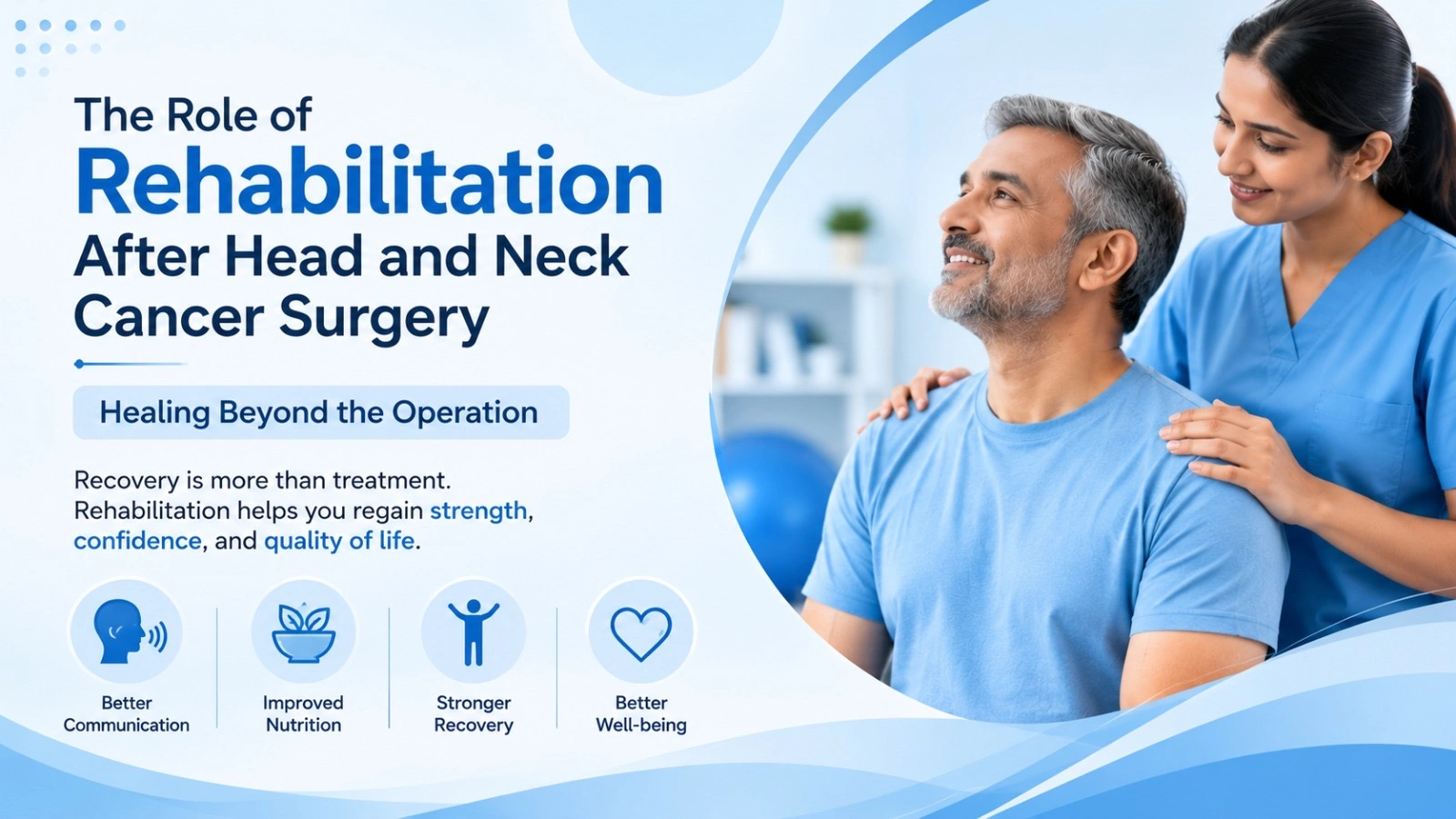
When people hear the words “cancer surgery,” most imagine that once the operation is done, the hardest part is over.
But for many patients with head and neck cancer, surgery is only one chapter of recovery.
The days and weeks after treatment often bring a different set of challenges—learning to eat comfortably again, finding confidence while speaking, adjusting to changes in appearance, managing discomfort, and slowly returning to everyday routines.
This is where rehabilitation becomes an important part of healing.
And no—rehabilitation does not mean something has gone wrong.
It means giving your body and mind the support they need to recover, adapt, and regain quality of life.
What is Rehabilitation After Head and Neck Cancer Surgery?
Rehabilitation after head and neck cancer surgery refers to structured support that helps patients recover physically, emotionally, and functionally after treatment.
Head and neck cancer surgeries may affect important daily functions such as:
- Speaking
- Swallowing
- Eating
- Breathing
- Facial movement
- Jaw mobility
- Neck movement
- Appearance and confidence
Rehabilitation supports patients in returning to these activities as comfortably and safely as possible.
The goal is not just recovery.
It is helping people return to living.
Why Rehabilitation Matters More Than People Realise
Many patients expect recovery to happen automatically with time.
While healing naturally occurs, rehabilitation can help improve comfort, reduce complications, and support better outcomes.
Without proper rehabilitation, patients may experience:
- Difficulty swallowing food and liquids
- Speech-related concerns
- Jaw tightness
- Limited neck movement
- Fatigue and weakness
- Nutritional difficulties
- Emotional stress
Early rehabilitation often leads to better long-term recovery and improved quality of life.
Types of Rehabilitation After Head and Neck Cancer Surgery
Speech and Communication Rehabilitation
Communication can feel different after surgery involving the mouth, tongue, throat, or voice structures.
Speech rehabilitation may help patients:
- Improve speech clarity
- Strengthen communication muscles
- Learn adaptive communication methods
- Build confidence in social settings
Recovery often happens gradually—and every improvement matters.
Swallowing Rehabilitation
Eating is deeply connected to comfort, routine, and enjoyment.
After surgery, swallowing rehabilitation may include:
- Guided swallowing exercises
- Safe eating techniques
- Food texture modifications
- Strategies to reduce discomfort while eating
Many patients improve significantly with consistent support.
Nutritional Rehabilitation
Nutrition plays a major role in recovery.
A well-supported nutrition plan can help:
- Promote healing
- Maintain body strength
- Support immunity
- Improve energy levels
Diet modifications may be recommended depending on recovery needs.
Physical Rehabilitation
Head and neck surgery may impact movement and posture. Physical rehabilitation may support:
- Better flexibility
- Reduced stiffness
- Improved shoulder and neck movement
- Return to daily activities
Small improvements often create meaningful progress.
Emotional and Psychological Rehabilitation Recovery includes emotional healing too.
Patients may experience:
- Anxiety
- Reduced confidence
- Frustration
- Concerns about returning to normal life
Counselling, emotional support, and family involvement can become valuable parts of recovery.
What Does Recovery Actually Look Like?
A common question patients ask is:
“When will I feel normal again?”
Recovery timelines vary.
For some people, improvements happen within weeks.
For others, recovery may continue for months.
Progress can sometimes look like:
- Finishing meals comfortably
- Speaking more confidently
- Returning to work
- Enjoying time with family
- Feeling comfortable in social situations again
These milestones deserve recognition.
Healing Is More Than Surgery
Head and neck cancer surgery treats disease.
Rehabilitation supports life after treatment.
Recovery is not measured only through reports and scans.
It is measured through confidence, comfort, communication, independence, and returning to everyday life.
Healing may take time—but with the right rehabilitation and support, progress becomes possible.
Frequently Asked Questions (FAQs)
Why is rehabilitation important after head and neck cancer surgery?
Rehabilitation helps patients recover functions such as speaking, swallowing, eating, movement, and emotional well-being after treatment.
How long does rehabilitation after head and neck cancer surgery take?
Recovery timelines vary depending on treatment type, surgery extent, and individual healing. Some patients improve within weeks, while others may require longer support.
Can patients speak normally again after head and neck cancer surgery?
Many patients experience improvement through speech therapy and rehabilitation, although outcomes differ based on the area treated.
Is difficulty swallowing normal after surgery?
Temporary swallowing challenges may occur after treatment. Rehabilitation exercises and medical guidance can help improve comfort and safety.
Does every patient require rehabilitation?
Rehabilitation needs differ from patient to patient, but many people benefit from some form of physical, nutritional, speech, or emotional recovery support.
Disclaimer
Readers should not treat any information in this blog as medical advice for their condition. It is very important that an in-person consultation be conducted with an expert before taking any medication or treatment.