
Mouth Cancer in India: Why Early Detection Can Save Lives
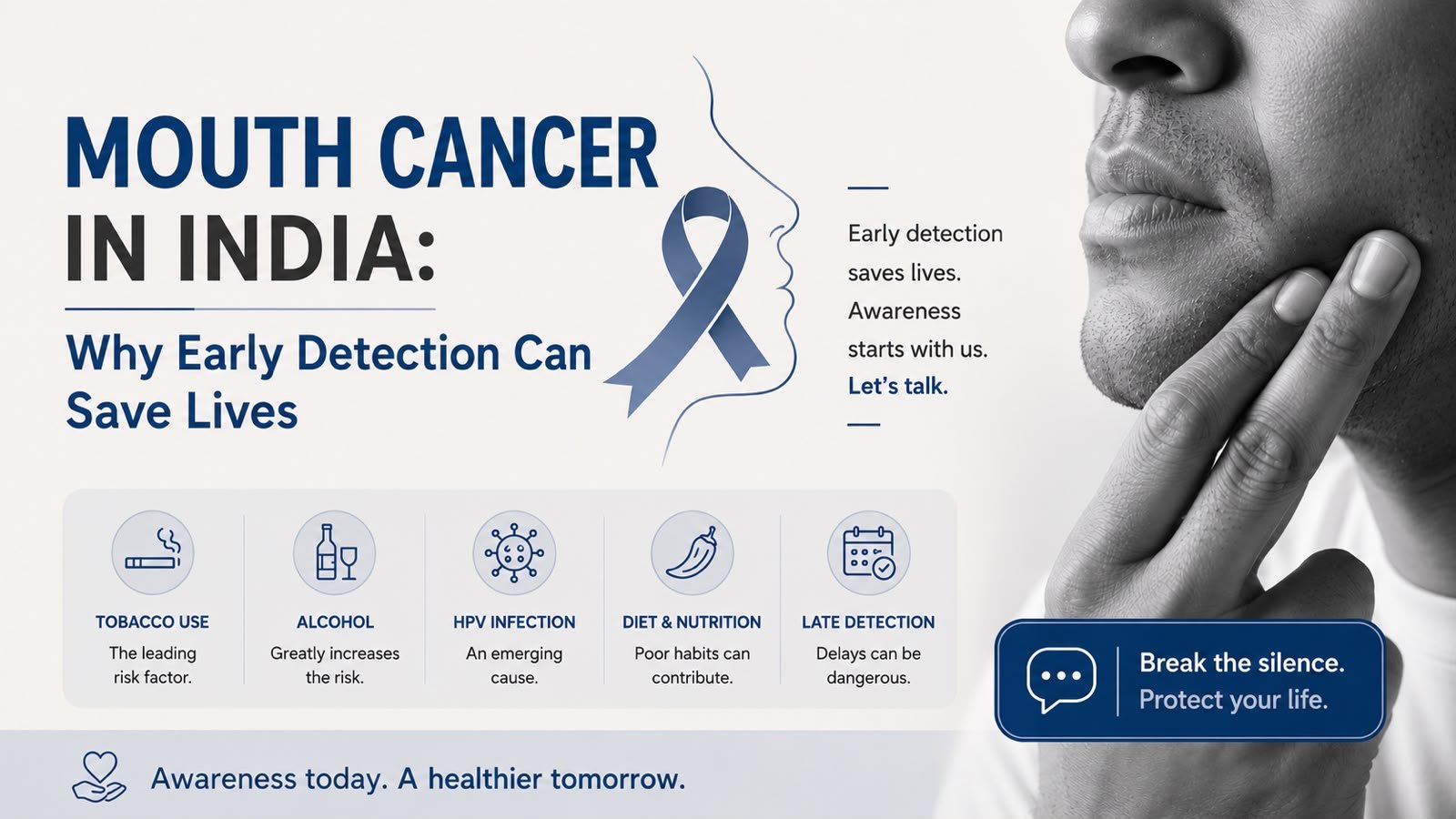
Mouth cancer is one of the most common cancers in India, yet many people still ignore its earliest warning
signs.
A persistent mouth ulcer is dismissed as “just a sore.” A white patch is blamed on spicy food. Difficulty
opening the mouth is accepted as a consequence of tobacco use or ageing. Weeks turn into months before
medical advice is sought.
Unfortunately, this delay is one of the biggest challenges in treating mouth cancer.
When detected early, many mouth cancers can be treated successfully with excellent functional outcomes.
However, when diagnosis is delayed, treatment often becomes more complex and may require more
extensive surgery and additional therapies.
Recognising the early signs and seeking timely medical attention can make a significant difference.
What Is Mouth Cancer?
Mouth cancer, also known as oral cancer, develops in the tissues of the oral cavity.
It can occur in the:
– Tongue
– Inner lining of the cheeks (buccal mucosa)
– Gums
– Floor of the mouth
– Hard palate
– Lips
– Retromolar region (area behind the last molar)
Most mouth cancers begin in the thin lining of the mouth and are known as oral squamous cell
carcinomas.
Because these areas are involved in speaking, eating, swallowing, and facial expression, early diagnosis is
important not only for treating the disease but also for preserving function and quality of life.
Why Is Mouth Cancer So Common in India?
India carries one of the highest burdens of mouth cancer worldwide. Several factors contribute to this:
Tobacco Use
The strongest risk factor is tobacco in all its forms, including:
– Gutkha
– Khaini
– Pan masala containing
– tobacco
– Zarda
– Cigarettes
– Bidis
– Hookah
Long-term exposure damages the lining of the mouth and significantly increases the risk of developing
cancer.
Alcohol Consumption
Heavy alcohol intake further increases the risk, particularly when combined with tobacco use.
Together, tobacco and alcohol have a multiplying effect rather than simply adding to the risk.
Poor Oral Hygiene and Chronic Irritation
Poor dental hygiene, broken teeth, ill-fitting dentures, and long-standing irritation may contribute to cancer
development in susceptible individuals, although they are usually not the sole cause.
Human Papillomavirus (HPV)
Certain head and neck cancers, particularly those involving the oropharynx, are associated with high-risk
HPV infection. However, HPV plays a much smaller role in cancers arising within the oral cavity than tobacco-
related disease.
Early Signs of Mouth Cancer
Not every mouth ulcer is cancer.
Most mouth ulcers heal within two weeks.
However, any persistent or unusual change should be examined by a healthcare professional.
Warning signs include:
– A mouth ulcer that does not heal within two weeks
– White patches inside the mouth
– Red patches inside the mouth
– A lump or thickening in the mouth
– Persistent pain or burning
– Difficulty chewing or swallowing
– Difficulty opening the mouth
– Loose teeth without an obvious dental cause
– Numbness of the lip or tongue
– A lump in the neck
– Persistent voice changes
These symptoms do not always indicate cancer, but they should never be ignored.
Why Early Diagnosis Matters
One of the greatest advantages of detecting mouth cancer early is that treatment is often less extensive.
Early-stage cancers may require smaller operations, preserve more normal tissue, and allow faster recovery.
Delayed diagnosis, on the other hand, can result in:
– Larger tumours
– Spread to lymph nodes in the neck
– More complex surgery
– Reconstructive procedures
– Radiotherapy or chemotherapy after surgery
– Longer recovery
Early evaluation creates more treatment options and often leads to better outcomes.
When Should You See a Specialist?
Arrange a medical evaluation if you notice:
– An ulcer lasting more than two weeks
– A persistent white or red patch
– A lump inside the mouth
– Difficulty swallowing
– Difficulty opening the mouth
– Unexplained bleeding from the mouth
– Persistent pain
– A swelling in the neck
Many of these conditions turn out to be non-cancerous.
However, only a proper examination—and when necessary, a biopsy—can establish the diagnosis.
Seeking an opinion early is always better than waiting for symptoms to worsen.
Can Mouth Cancer Be Prevented?
Although not every case is preventable, several lifestyle changes can significantly reduce the risk.
These include:
– Stopping tobacco use in all forms
– Limiting alcohol consumption
– Maintaining good oral hygiene
– Having regular dental check-ups
– Eating a balanced diet rich in fruits and vegetables
– Seeking prompt evaluation for persistent mouth lesions
For people who use tobacco, quitting remains the single most important step in reducing future risk.
How Is Mouth Cancer Treated?
Treatment depends on several factors, including:
– The location of the tumour
– Stage of the disease
– Overall health
– Individual patient needs
Management may involve one or more of the following:
– Surgery
– Neck dissection
– Reconstructive surgery
– Radiation therapy
– Chemotherapy
– Targeted therapy
– Immunotherapy
– Rehabilitation, including speech and swallowing therapy
Every treatment plan is tailored to the individual after discussion within a multidisciplinary cancer team.
Life After Treatment
Treatment is only one part of the journey.
Recovery often includes rehabilitation to help restore:
– Speech
– Swallowing
– Nutrition
– Jaw movement
– Shoulder function
– Emotional well-being
Regular follow-up is equally important, allowing your healthcare team to monitor healing, identify any
recurrence early, and support long-term recovery.
Many patients return to work, family life, and their normal activities after successful treatment and
rehabilitation.
The Conversation We Need to Have
Mouth cancer should not be a disease that people fear to discuss.
It should be one that people recognise early.
If you notice a persistent ulcer, an unusual patch, or a swelling that does not resolve, do not ignore it and do
not rely solely on home remedies.
Most mouth ulcers are not cancer.
But the few that are deserve early attention.
The sooner a diagnosis is made, the greater the opportunity for effective treatment, preservation of
function, and long-term recovery.
Sometimes, a simple examination can provide reassurance.
When it cannot, it can provide something even more valuable—an opportunity to begin treatment before
the disease has a chance to progress.
Frequently Asked Questions (FAQs)
Is every mouth ulcer a sign of cancer?
No. Most mouth ulcers are caused by minor trauma, infections, or nutritional deficiencies and heal within
two weeks. However, any ulcer that persists beyond two weeks should be evaluated by a healthcare
professional.
What is the most common symptom of mouth cancer?
A non-healing ulcer is one of the most common early signs. Other symptoms include white or red patches,
lumps, difficulty swallowing, persistent pain, and restricted mouth opening.
Can mouth cancer occur in people who have never used tobacco?
Yes. Although tobacco is the strongest risk factor, mouth cancer can also occur in people without a history
of tobacco or alcohol use.
Is mouth cancer curable?
Many cases, particularly those diagnosed early, can be treated successfully. The prognosis depends on the
stage of the disease and timely treatment.
When should I consult a specialist?
Any persistent ulcer, patch, lump, unexplained bleeding, or difficulty swallowing lasting longer than two
weeks should be assessed by a healthcare professional experienced in oral cancer evaluation.
Disclaimer
Readers should not treat any information in this blog as medical advice for their condition. It is very important that an in-person consultation be conducted with an expert before taking any medication or treatment.