The Power of a Multi-Disciplinary Team in Treating Head & Neck Cancers
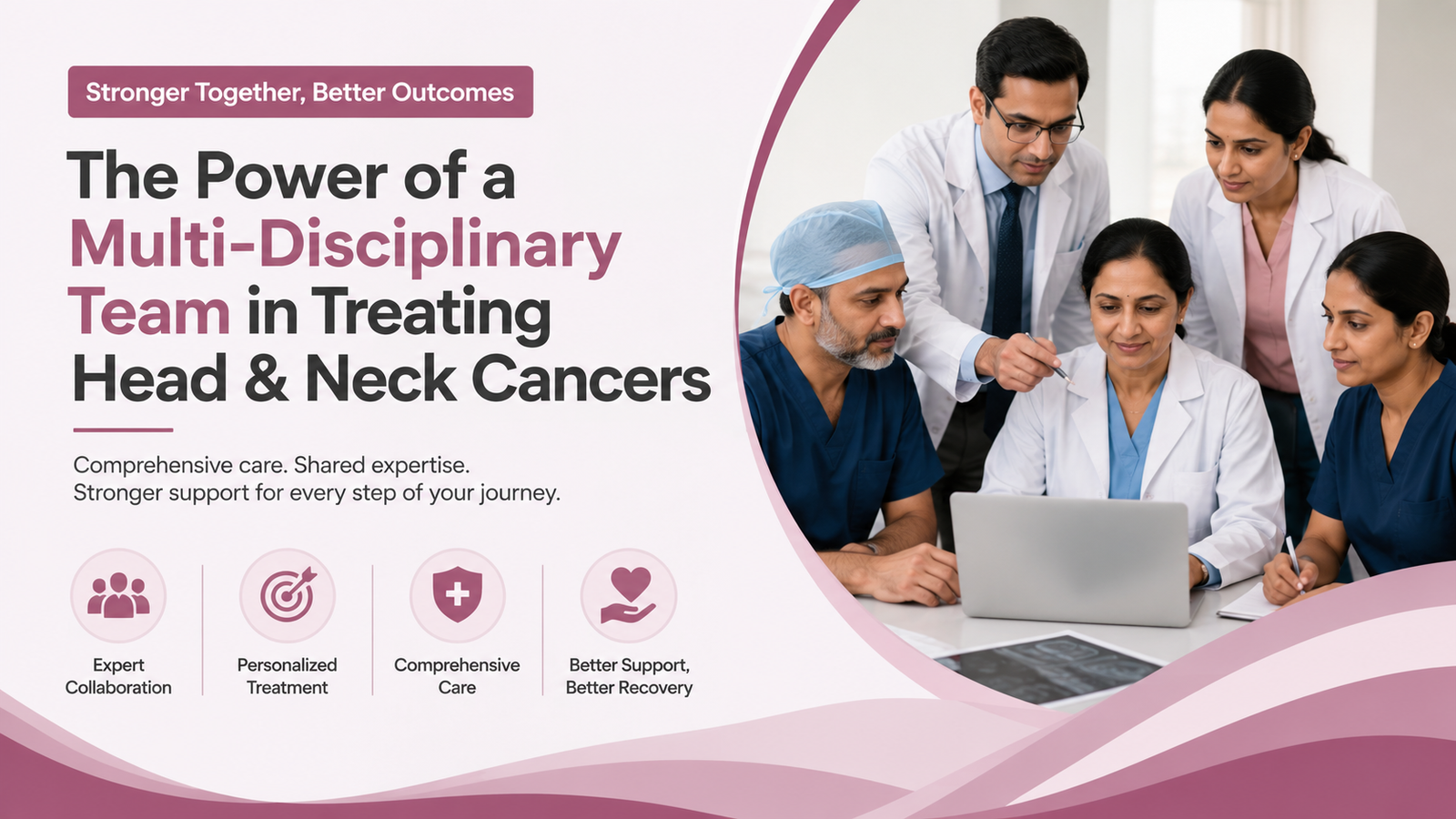
A diagnosis of head and neck cancer can feel overwhelming—not only because of the disease itself but also because of the complex decisions that follow. Questions about surgery, chemotherapy, radiation therapy, speech, swallowing, nutrition, reconstruction, and recovery often arise all at once.
The good news is that modern head and neck cancer treatment is no longer managed by a single doctor alone. Today, the best outcomes are achieved through a Multi-Disciplinary Team (MDT)—a group of specialists who collaborate to develop a personalized treatment plan for every patient.
At i-BOCC, this collaborative approach ensures that every aspect of your care is thoughtfully planned, helping you achieve the best possible medical and functional outcomes.
What Is a Multi-Disciplinary Team (MDT)?
A Multi-Disciplinary Team is a group of healthcare professionals from different specialties who work together to diagnose, treat, and support patients throughout their cancer journey.
Instead of consulting multiple doctors separately, the MDT discusses your case collectively and develops a treatment strategy tailored to your diagnosis, stage of cancer, overall health, lifestyle, and personal priorities.
This approach ensures that every important aspect of your treatment is considered before making any decisions.
Why Head & Neck Cancer Requires a Team Approach
Unlike many other cancers, head and neck cancers affect some of the body’s most vital functions, including:
- Speaking
- Swallowing
- Eating
- Breathing
- Facial appearance
- Taste and smell
- Communication
- Emotional well-being
Treating cancer is only one part of the journey. Preserving these essential functions while achieving the best oncological outcome requires expertise from multiple specialists.
A coordinated treatment plan helps balance cancer control with maintaining quality of life.
Who Is Part of the Multi-Disciplinary Team?
Head & Neck Surgical Oncologist
The surgical oncologist evaluates whether surgery is the most appropriate treatment and performs procedures to remove the tumour while preserving as much healthy tissue as possible.
They also coordinate with reconstructive surgeons to restore both function and appearance after surgery.
Radiation Oncologist
For many patients, radiation therapy plays a crucial role either as the primary treatment or after surgery.
The radiation oncologist determines:
- Whether radiation is necessary
- The appropriate dosage
- Treatment duration
- Techniques that minimize damage to healthy tissues
Medical Oncologist
Medical oncologists manage:
- Chemotherapy
- Targeted therapy
- Immunotherapy
- Combination treatment plans
They help determine the most effective systemic treatment based on the type and stage of cancer.
Plastic & Reconstructive Surgeon
Removing a tumour may leave defects involving the jaw, tongue, lips, face, or throat.
Reconstructive surgeons restore:
- Facial symmetry
- Speech
- Swallowing function
- Jaw movement
- Appearance
Modern reconstructive techniques often allow patients to return to eating, speaking, and social interactions with greater confidence.
Radiologist
Radiologists interpret imaging studies such as:
- CT scans
- MRI
- PET-CT
- Ultrasound
Accurate imaging helps define the tumour’s size, location, and spread, enabling precise treatment planning.
Pathologist
A pathologist examines biopsy and surgical tissue samples to confirm:
- Cancer type
- Tumour grade
- Surgical margins
- Lymph node involvement
These findings guide further treatment decisions.
Speech and Swallow Therapist
Head and neck cancer treatments can affect communication and swallowing.
Speech therapists help patients:
- Improve speech clarity
- Regain swallowing function
- Reduce aspiration risk
- Strengthen affected muscles
- Improve quality of life
Early rehabilitation often leads to better long-term outcomes.
Clinical Nutritionist
Nutrition is a cornerstone of successful cancer treatment.
A nutritionist helps patients:
- Maintain body weight
- Improve immunity
- Reduce treatment-related side effects
- Manage swallowing difficulties
- Support wound healing
- Recover faster after surgery
Individualized nutrition plans can significantly improve treatment tolerance.
Physiotherapist
Following surgery or radiation, patients may experience:
- Neck stiffness
- Shoulder weakness
- Reduced jaw movement
- Muscle tightness
- Fatigue
Physiotherapy helps restore mobility, reduce pain, and improve daily functioning.
Psychologist or Counsellor
Cancer affects emotional health as much as physical health.
Professional counselling helps patients and families cope with:
- Anxiety
- Depression
- Fear of recurrence
- Body image concerns
- Treatment-related stress
Emotional support plays a vital role throughout the cancer journey.
How Does the MDT Work Together?
Every patient’s case is reviewed collectively before treatment begins.
The team evaluates:
- Medical history
- Imaging results
- Biopsy findings
- Overall health
- Nutritional status
- Speech and swallowing function
- Personal preferences
- Expected treatment outcomes
After discussion, a comprehensive treatment plan is created that addresses both cancer treatment and long-term recovery.
This collaborative approach minimizes delays, reduces unnecessary treatments, and ensures that patients receive evidence-based care.
Benefits of a Multi-Disciplinary Team Approach
Personalized Treatment Plans
No two patients have identical cancers.
The MDT develops individualized treatment strategies based on the patient’s unique condition rather than using a one-size-fits-all approach.
Better Treatment Outcomes
Studies have shown that coordinated cancer care can lead to:
- Improved survival rates
- More accurate diagnosis
- Better treatment planning
- Reduced complications
- Improved functional outcomes
Faster Decision Making
Rather than scheduling multiple appointments with different specialists over several weeks, the MDT discusses cases together, enabling quicker and more coordinated treatment decisions.
This is particularly important because delaying treatment may allow certain cancers to progress.
Preservation of Function
The goal is not only to remove the cancer but also to preserve:
- Speech
- Swallowing
- Facial movement
- Appearance
- Breathing
- Quality of life
Early involvement of reconstructive surgeons, speech therapists, and rehabilitation specialists makes a significant difference.
Comprehensive Support Throughout Recovery
Cancer recovery continues long after treatment ends.
The MDT remains involved in:
- Follow-up care
- Rehabilitation
- Nutrition counselling
- Emotional support
- Surveillance for recurrence
- Long-term quality-of-life management
When Should You Seek Care at a Centre with an MDT?
If you have been diagnosed with—or are suspected to have—head and neck cancer, seeking care at a centre that offers a multi-disciplinary team approach can make a meaningful difference.
This is especially important if you have:
- Oral cancer
- Tongue cancer
- Throat cancer
- Voice box (laryngeal) cancer
- Salivary gland cancer
- Thyroid-related neck cancers
- Recurrent head and neck cancer
- Advanced-stage disease
- Complex reconstructive needs
Receiving coordinated care from the beginning helps ensure that every stage of treatment is carefully planned.
Why Patients Benefit from Coordinated Cancer Care
Cancer treatment is not simply about removing a tumour. It is about helping patients return to their daily lives with confidence and dignity.
A coordinated team approach ensures that every decision considers not only survival but also the patient’s ability to eat, speak, smile, work, and enjoy life after treatment.
This comprehensive model of care reflects the evolving standards of modern oncology, where collaboration among specialists leads to more holistic and patient-centred outcomes.
Conclusion
Head and neck cancers require expertise from multiple specialties, and no single doctor can address every aspect of diagnosis, treatment, reconstruction, rehabilitation, and recovery alone.
A Multi-Disciplinary Team (MDT) brings together surgeons, oncologists, reconstructive specialists, nutritionists, rehabilitation experts, and counsellors to deliver coordinated, evidence-based care tailored to each patient.
At i-BOCC, we believe that successful cancer treatment goes beyond eliminating the disease. Our focus is on preserving function, restoring confidence, and supporting patients at every step of their journey.
If you or a loved one has been diagnosed with head and neck cancer, early evaluation by an experienced multi-disciplinary team can make a significant difference in treatment outcomes and quality of life.
Frequently Asked Questions (FAQs)
What is a Multi-Disciplinary Team in cancer treatment?
A Multi-Disciplinary Team (MDT) is a group of specialists—including surgical oncologists, medical oncologists, radiation oncologists, reconstructive surgeons, nutritionists, speech therapists, and other experts—who work together to create the most appropriate treatment plan for each patient.
Why is an MDT important for head and neck cancer?
Head and neck cancers can affect speech, swallowing, breathing, and appearance. An MDT ensures that treatment addresses both cancer control and the preservation of these essential functions.
Does every head and neck cancer patient need reconstruction?
Not every patient requires reconstructive surgery. The need depends on the tumour’s size, location, and the extent of tissue removed during cancer surgery. When needed, reconstruction helps restore both function and appearance.
Can nutrition affect cancer recovery?
Yes. Proper nutrition supports immunity, helps patients tolerate treatment, promotes wound healing, and improves overall recovery. A clinical nutritionist is an important member of the cancer care team.
Does coordinated cancer care improve outcomes?
Research has shown that coordinated, multi-disciplinary care can improve treatment planning, reduce complications, enhance functional recovery, and contribute to better overall patient outcomes.
Disclaimer
Readers should not treat any information in this blog as medical advice for their condition. It is very important that an in-person consultation be conducted with an expert before taking any medication or treatment.