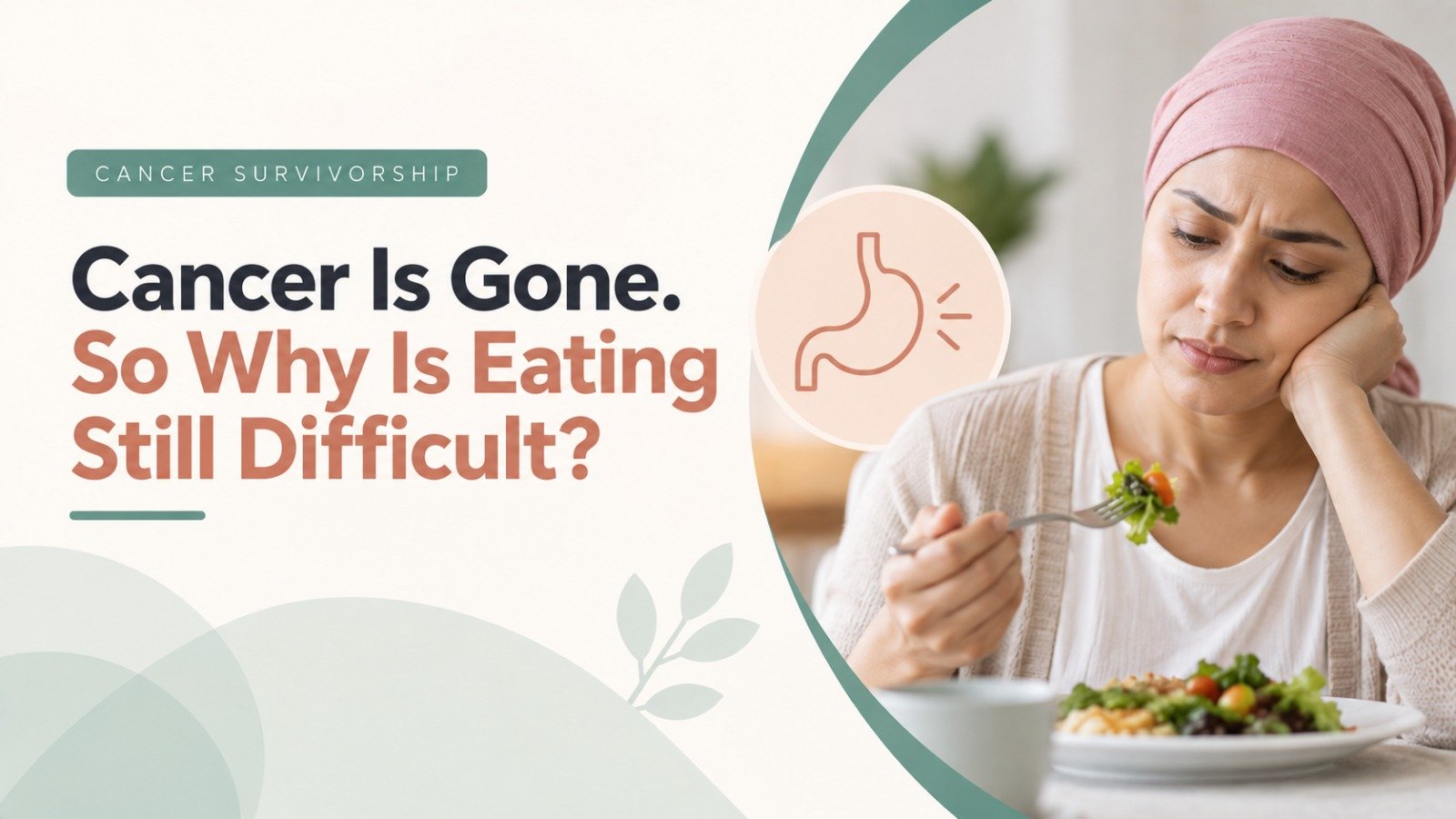
Cancer Is Gone. So Why Is Eating Still Difficult?
Imagine hearing your doctor say:
“Your cancer treatment is complete.”
For a patient and family, those words can feel like the end of a very long journey.
But then everyday life begins again.
You sit down for a meal.
You take a sip of water.
You cough.
Food feels difficult to swallow.
You need much longer to finish a meal.
And suddenly you wonder:
“If the cancer is gone, why can’t I eat normally?”
The answer is simple:
Cancer treatment may end before functional recovery does.
Why can swallowing become difficult after head and neck cancer?
Head and neck cancers can affect structures involved in eating, swallowing, speaking and breathing.
Depending on the location of the cancer, surgery may involve the:
- Tongue
- Jaw
- Throat
- Cheek
- Floor of the mouth
- Other structures involved in swallowing
Radiation therapy can also cause changes in the tissues that affect movement, moisture and flexibility.
As a result, swallowing can become more difficult.
Swallowing isn’t as simple as it looks
Every time you swallow, multiple muscles and structures have to work together in a very precise sequence.
Food needs to move from the mouth into the throat and then into the food pipe.
At the same time, the airway needs to be protected.
If that coordination is affected, food or liquid can sometimes enter the airway.
This is called aspiration.
And aspiration doesn’t always cause dramatic coughing
That’s something many people don’t realise.
A person may not cough every time food or liquid enters the airway.
That’s why certain symptoms shouldn’t simply be dismissed as “normal after surgery.”
Look out for:
- Coughing while eating or drinking
- A wet or gurgly voice after swallowing
- Food remaining in the mouth
- Very long mealtimes
- Repeated chest infections
- Unexplained weight loss
- Difficulty swallowing certain textures
- Fear of eating or drinking
These can all be reasons to speak to your healthcare team.
This is where rehabilitation becomes important
Recovery isn’t always about another medicine or another operation.
Sometimes, the body needs to relearn movement and coordination.
A swallowing rehabilitation program may include:
- Specific swallowing exercises
- Tongue exercises
- Jaw mobility exercises
- Changes in food consistency
- Positioning techniques
- Speech and swallowing therapy
- Nutritional support
The right program depends entirely on the patient’s surgery, treatment and current function.
What about speech?
The same structures that help us swallow often contribute to speech.
After surgery, patients may experience changes in:
- Pronunciation
- Voice quality
- Tongue movement
- Speech clarity
- Ability to speak for long periods
Speech therapy can help patients work on these difficulties and regain greater confidence in communication.
Cancer-free is not the same as fully recovered
This distinction matters.
A scan may show no evidence of cancer.
The surgical wound may have healed.
But the patient may still be working on:
Eating. Speaking. Moving. Regaining strength. Returning to everyday life.
That’s why rehabilitation should not be considered an optional extra.
It can be an important part of the recovery journey.
The real goal of cancer treatment
Of course, the first goal is to control or eliminate the cancer.
But after that comes another important question:
“How can we help this person live well again?”
Can they sit at the dining table with their family?
Can they enjoy their favourite food?
Can they speak comfortably?
Can they return to work?
Can they participate in everyday life without constantly thinking about their cancer treatment?
Because surviving cancer is a tremendous victory.
But getting your life back is part of recovery too.
Disclaimer
Readers should not treat any information in this blog as medical advice for their condition. It is very important that an in-person consultation be conducted with an expert before taking any medication or treatment.