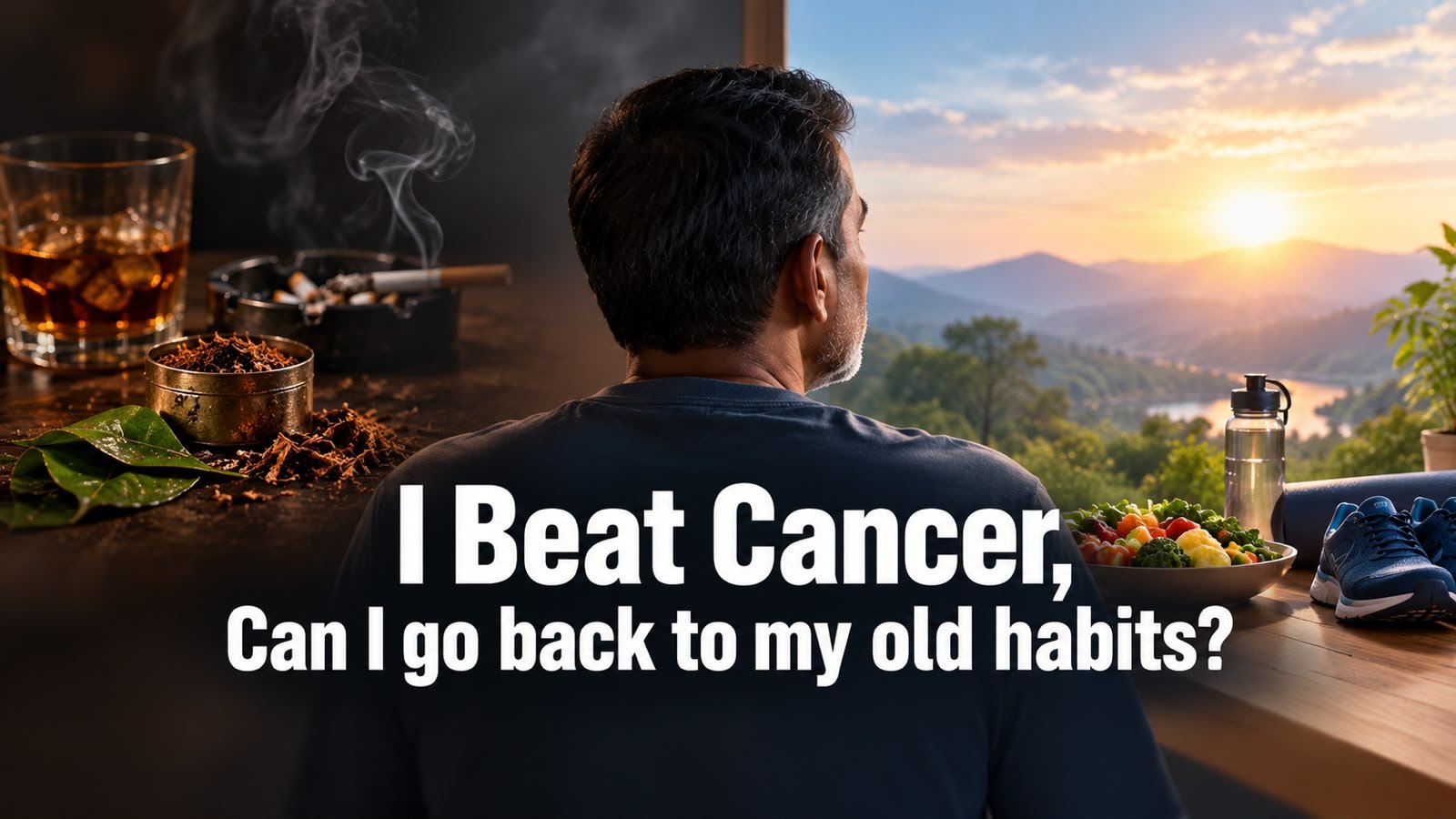
“I Beat Cancer. Can I Go Back to My Old Habits?”
You finished treatment.
The surgery is behind you. The radiation is over. The follow-up scans bring relief.
Then, one day, an old thought returns:
“Just one cigarette.”
Or a familiar packet of tobacco.
Or a drink with friends.
It can feel like going back to normal.
But after head and neck cancer treatment, returning to tobacco, smoking, chewing tobacco, gutkha, areca nut products or heavy alcohol use is not simply “getting back to your old lifestyle.”
It can put your recovery at risk.
Cancer Recovery Doesn’t Mean Your Body Has Forgotten
Cancer treatment may remove or destroy the cancer, but it does not erase the effects of years of exposure to carcinogens.
The tissues of the mouth, throat and upper airway may already have experienced significant damage.
Continuing tobacco exposure after treatment can increase the risk of second primary cancers, treatment complications and other serious health problems.
And when tobacco and alcohol are used together, their harmful effects on head and neck cancer risk can be particularly significant.
So when someone says:
“I’ve already had cancer. What difference will one cigarette make?”
The honest answer is: one moment does not define your recovery—but returning to the habit can become a serious problem.
The Real Danger Is Falling Back Into the Pattern
Addiction rarely announces itself dramatically.
It can begin with:
“Only at parties.”
Then:
“Only when I’m stressed.”
Then:
“Only one a day.”
And suddenly, the old routine is back.
Nicotine addiction can make stopping difficult even when someone genuinely wants to quit.
For a head and neck cancer survivor, triggers can be particularly powerful—stress, social situations, alcohol, old friends, certain places or even the smell of tobacco.
Recognising these triggers early can make relapse prevention easier.
Your Mouth Has Already Been Through Enough
Head and neck cancer treatment can affect oral health, swallowing, speech, taste, saliva production and nutrition.
Smoking can further irritate the mouth and throat and contribute to several oral and respiratory problems.
Smokeless tobacco is not a “safe alternative” to smoking.
Products such as chewing tobacco, gutkha and other tobacco preparations can expose the body to cancer-causing substances and are strongly associated with oral cancer.
And replacing tobacco with areca nut does not make the habit harmless. Areca nut itself is associated with serious oral health risks.
What About Alcohol?
For some survivors, alcohol becomes linked with tobacco use.
A drink can lower inhibitions and make it easier to think:
“I’ll have just one.”
That one decision can become a trigger for tobacco relapse.
Alcohol itself is also a recognised risk factor for several cancers, including cancers of the head and neck.
If you are recovering from head and neck cancer, discuss alcohol use openly with your oncology team rather than assuming that your previous level of consumption is safe.
Your Recovery Is Bigger Than One Habit
Quitting is not simply about removing a cigarette or packet from your day.
It can mean rebuilding your routine.
Try identifying your triggers.
Change the situations that encourage tobacco use.
Tell your family and friends that you are trying to stay tobacco-free.
Seek professional help if cravings are difficult to control.
Your oncologist, tobacco-cessation professional or mental-health professional can help create a plan that works for you.
And if you relapse?
Don’t turn one lapse into a return to the entire habit.
Tell someone. Restart. Get support.
There is no benefit in thinking, “I have already failed, so there is no point trying again.”
Cancer Recovery Is About More Than a Clear Scan
A clear scan is an important milestone.
But recovery also means protecting the life you are rebuilding.
Your voice.
Your ability to eat.
Your relationships.
Your confidence.
Your health.
Your future.
Don’t let an old addiction become part of a new chapter.
If you have completed head and neck cancer treatment and are struggling with tobacco, smoking, gutkha, chewing tobacco, areca nut or alcohol, talk honestly with your treating team.
You don’t have to fight the habit alone.
You fought cancer. Now protect the recovery you worked so hard for.
Disclaimer
Readers should not treat any information in this blog as medical advice for their condition. It is very important that an in-person consultation be conducted with an expert before taking any medication or treatment.