Oral Cancer Treatment in India: Surgery, Reconstruction & Rehabilitation Explained
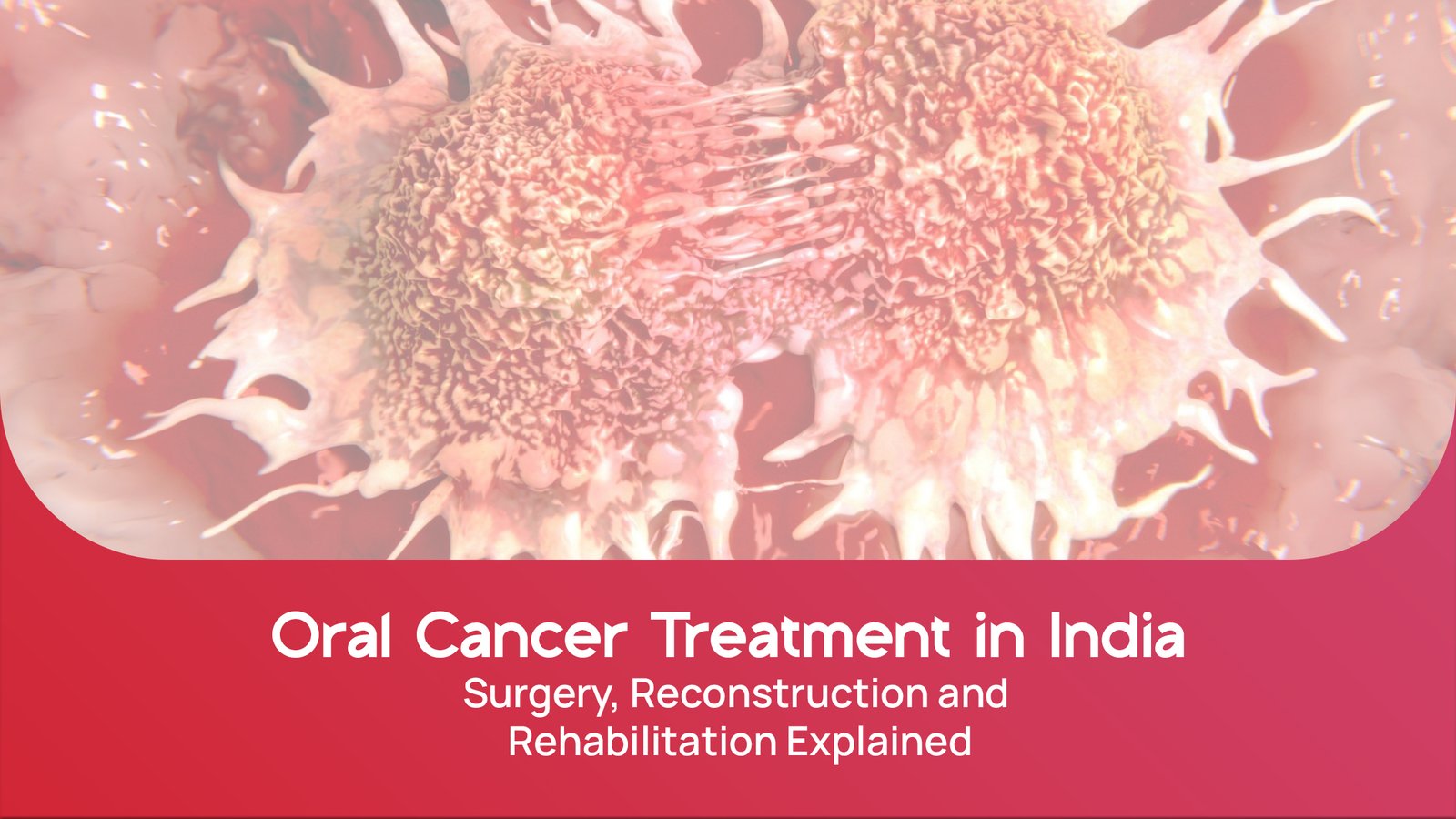
Oral cancer is one of the most commonly diagnosed cancers in India, particularly affecting the mouth, tongue, cheeks, jaw, and floor of the mouth. Despite its high incidence, oral cancer is often detected late due to lack of awareness, social stigma, and delayed medical consultation.
The good news is that oral cancer treatment in India has evolved significantly. Today, patients benefit from advanced surgical techniques, precise reconstruction, and structured rehabilitation programs that focus not just on survival, but also on restoring speech, swallowing, appearance, and confidence.
Understanding Oral Cancer
Oral cancer develops in the tissues of the mouth and surrounding structures. Commonly affected areas include:
- Tongue
- Buccal mucosa (inner cheek)
- Floor of the mouth
- Lips
- Jaw and palate
Tobacco use (smoking or chewing), alcohol consumption, poor oral hygiene, and HPV infection are among the leading risk factors.
Step 1: Accurate Diagnosis and Staging
Effective oral cancer treatment begins with early and accurate diagnosis.
Diagnostic evaluation usually includes:
- Detailed oral and head–neck examination
- Biopsy to confirm cancer type
- Imaging tests such as CT scan, MRI, or PET scan
- Assessment of lymph node involvement in the neck
Staging helps doctors understand:
- Size and depth of the tumor
- Spread to lymph nodes
- Involvement of nearby structures
Early-stage oral cancer often requires simpler treatment with faster recovery.
Step 2: Surgery – The Primary Treatment for Oral Cancer
Surgery remains the most effective and definitive treatment for oral cancer, especially in early and locally advanced stages.
Surgical goals include:
- Complete removal of cancer with safe margins
- Preservation of vital functions like speech and swallowing
- Minimizing cosmetic impact
Types of oral cancer surgery may involve:
- Removal of part of the tongue (partial glossectomy)
- Resection of cheek, floor of mouth, or jawbone
- Neck dissection to remove affected lymph nodes
When detected early, surgery is often straightforward. In advanced cases, surgery becomes more complex but remains central to cure.

Step 3: Oral Cancer Reconstruction – Restoring Form and Function
One of the most important advancements in oral cancer care is reconstructive surgery.
Reconstruction is not cosmetic alone—it is essential for:
- Speech clarity
- Safe swallowing
- Facial symmetry
- Social confidence
Common reconstruction techniques include:
1. Microvascular Free Flap Surgery
- Tissue, muscle, or bone taken from arm, leg, or back
- Blood vessels reconnected under a microscope
- Ideal for large or complex defects
2. Local or Regional Flaps
- Tissue borrowed from nearby areas
- Suitable for smaller defects
3. Prosthetic Rehabilitation
- Custom obturators or dental prostheses
- Helpful when surgical reconstruction is not feasible
Often, combined approaches are used to achieve the best functional and aesthetic outcomes.
Step 4: Additional Treatments – Radiation and Chemotherapy
Depending on cancer stage and pathology reports, additional treatments may be advised.
These include:
- Radiation therapy to destroy remaining cancer cells
- Chemotherapy for advanced disease or nodal involvement
- Targeted or immunotherapy in select cases
These treatments reduce the risk of recurrence and improve long-term survival.
Step 5: Rehabilitation – A Critical Phase of Recovery
Recovery after oral cancer treatment does not end with surgery.
Rehabilitation focuses on:
- Speech therapy to restore clarity and articulation
- Swallowing therapy to return to safe oral intake
- Nutritional support to maintain strength and healing
- Physiotherapy for neck and shoulder mobility
Structured rehabilitation allows most patients to return to daily life activities with independence.
Step 6: Follow-Up and Survivorship Care
Long-term follow-up is essential in oral cancer care.
Follow-up includes:
- Regular clinical examinations
- Imaging when required
- Monitoring for recurrence or second cancers
- Counseling for tobacco and alcohol cessation
Lifestyle changes play a crucial role in preventing recurrence and improving outcomes.
Why Oral Cancer Outcomes Are Improving in India
- Increased awareness and early screening
- Availability of expert head and neck surgeons
- Advances in reconstruction and rehabilitation
- Multidisciplinary, patient-centric care models
When treated early and comprehensively, oral cancer is curable, and patients can regain a meaningful quality of life.
Final Thoughts
Oral cancer treatment in India today is holistic and outcome-driven. Modern care combines cancer control with restoration of function, appearance, and dignity. Early diagnosis, expert surgery, and structured rehabilitation together create the strongest path to recovery.
The earlier the treatment begins, the simpler the surgery and the faster the recovery.
Disclaimer:
This blog is intended for educational purposes only. Readers should not treat this information as medical advice for their condition. It is very important that an in-person consultation be conducted with a qualified expert before starting or modifying any treatment.