Life After Breast Cancer: What to Expect & What to Accept
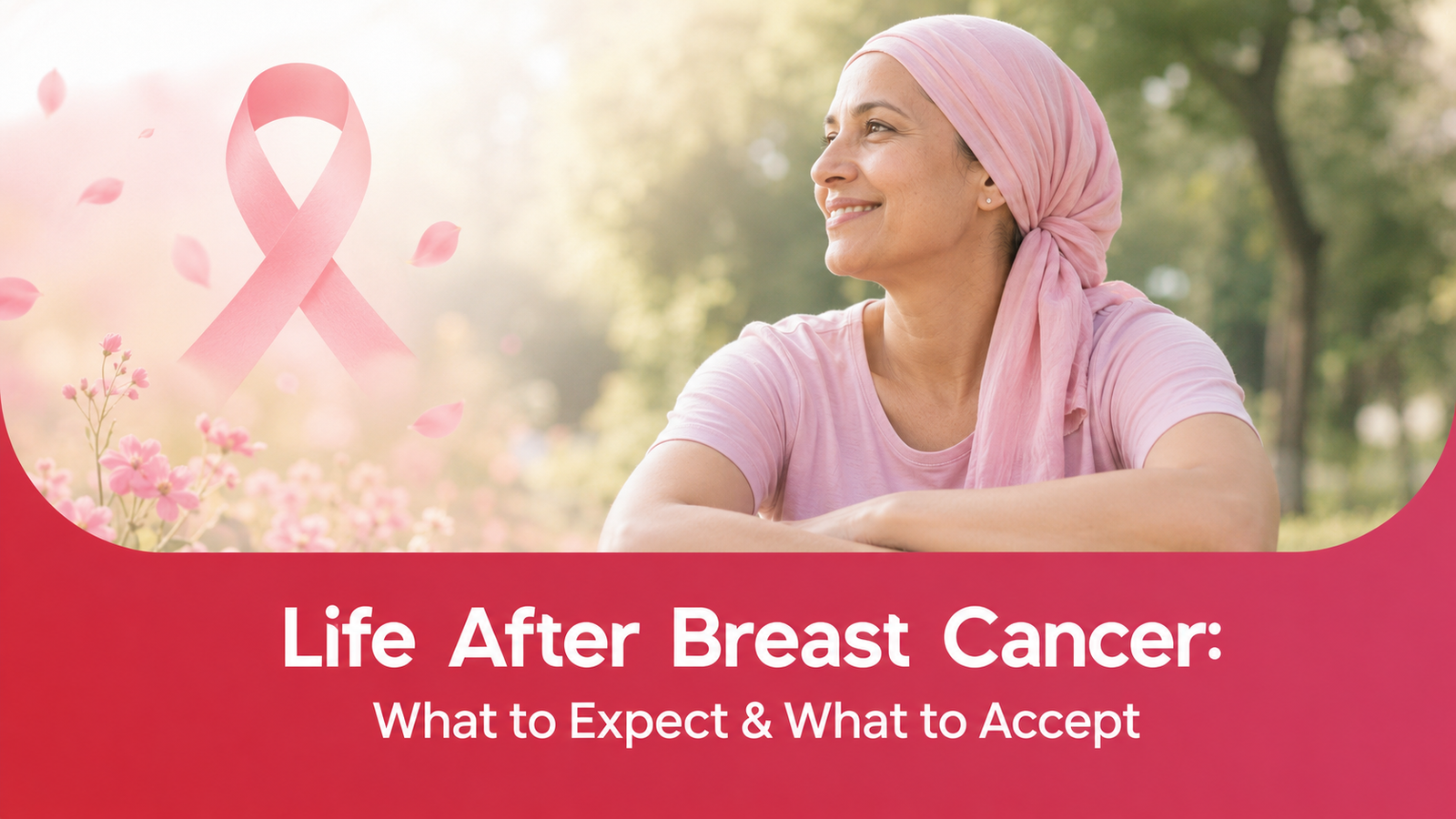
Completing breast cancer treatment is a major milestone. For many patients and families, it feels like the hardest part is finally over.
But in reality, life after breast cancer surgery, chemotherapy, radiation, or mastectomy is often a completely new phase of recovery — physically, emotionally, and mentally.
One of the most common things patients search online is:
- Life after breast cancer
- Recovery after breast cancer treatment
- Life after mastectomy
- Emotional recovery after breast cancer
- Side effects after breast cancer treatment
- Breast cancer survivorship
The truth is:
Recovery after breast cancer is not just about healing the body. It is also about adapting to a new normal.
This blog discusses what patients can realistically expect after breast cancer treatment and what aspects of recovery may require time, patience, and acceptance.
First, Understand This: Recovery Is Different for Every Woman
There is no “perfect timeline” after breast cancer treatment.
Recovery depends on:
- Cancer stage
- Type of surgery
- Chemotherapy
- Radiation therapy
- Emotional support system
- Overall health
Some women recover quickly. Others may need more time physically or emotionally.
Both are normal.
What Patients Can Expect After Breast Cancer Treatment
1. Physical Recovery Takes Time
After:
- Breast cancer surgery
- Mastectomy
- Breast conservation surgery
- Breast reconstruction
…the body needs time to heal.
Common temporary symptoms include:
- Fatigue
- Tightness around surgery area
- Shoulder stiffness
- Mild pain or numbness
- Reduced arm movement
Most women gradually improve with:
- Physiotherapy
- Regular movement
- Guided exercises
- Proper nutrition
Patience during this phase is important.
2. Emotional Ups & Downs Are Extremely Common
Many women expect to feel “normal” immediately after treatment ends.
But emotionally, patients may experience:
- Anxiety
- Fear of recurrence
- Mood changes
- Loss of confidence
- Emotional exhaustion
This happens even in women whose treatment was successful.
Why?
Because cancer treatment changes:
- Daily life
- Body image
- Future planning
- Sense of security
Emotional healing often continues long after physical recovery.
3. Body Image Changes Can Affect Confidence
This is especially common after:
- Mastectomy surgery
- Hair loss from chemotherapy
- Weight fluctuations
- Breast asymmetry
Some women feel uncomfortable:
- Wearing certain clothes
- Socializing
- Looking at surgical scars
This is an important and often under-discussed part of breast cancer recovery.
Modern options like:
- Breast Reconstruction Surgery
- Prosthesis
- Oncoplastic surgery
can help many women regain confidence and body balance.
4. Follow-Up Visits Become Part of Life
Even after treatment completion, regular follow-up is extremely important.
These visits may include:
- Clinical examination
- Mammography
- Blood tests
- Imaging when required
The purpose is:
- Monitoring recovery
- Detecting recurrence early
- Managing side effects
Most patients gradually become more comfortable with follow-up routines over time.
5. Fatigue After Cancer Treatment Is Real
Many women continue to experience tiredness for weeks or months after treatment.
This can happen due to:
- Chemotherapy
- Radiation
- Emotional stress
- Reduced physical activity
Recovery improves with:
- Sleep
- Nutrition
- Physical activity
- Structured daily routine
Patients should avoid comparing their recovery speed with others.
What Patients May Need to Accept
Acceptance does not mean “giving up.”
It means understanding that some changes are part of the healing journey.
1. The Fear of Recurrence May Never Completely Disappear
Many breast cancer survivors continue to worry about:
“What if the cancer comes back?”
This fear is common and valid.
Over time, regular follow-ups and normal routines usually help reduce anxiety.
2. Life Priorities Often Change
After breast cancer treatment, many women:
- Value health differently
- Prioritize relationships more
- Reduce stress
- Focus more on self-care
This emotional shift is common among cancer survivors.
3. Some Physical Changes May Be Permanent
Depending on treatment, some women may experience:
- Surgical scars
- Reduced sensation
- Mild asymmetry
- Early menopause
- Hormonal changes
Learning to adapt gradually becomes part of long-term recovery.
4. Asking for Help Is Not Weakness
Many women try to appear “strong” throughout treatment.
But recovery becomes easier with:
- Family support
- Counselling
- Physiotherapy
- Survivor groups
- Open communication
No patient should feel pressured to handle everything alone.
How Patients Can Improve Recovery After Breast Cancer
Helpful habits include:
✔ Regular exercise
✔ Balanced nutrition
✔ Adequate sleep
✔ Follow-up compliance
✔ Stress management
✔ Avoiding smoking and alcohol
✔ Staying socially connected
Small lifestyle improvements often significantly improve quality of life.
Final Thoughts
Life after breast cancer treatment is not about “going back” to who you were earlier.
It is about:
- Healing
- Adjusting
- Recovering
- Rebuilding confidence
Modern breast cancer treatment, breast reconstruction, rehabilitation, and emotional support systems have significantly improved survivorship and quality of life.
Most importantly:
Recovery is not a race. Every patient heals differently.
Disclaimer
Readers should not treat any information in this blog as medical advice for their condition. It is very important that an in-person consultation be conducted with an expert before taking any medication or treatment