More Than a Survivor: Radhika Madhani’s Breast Cancer Journey
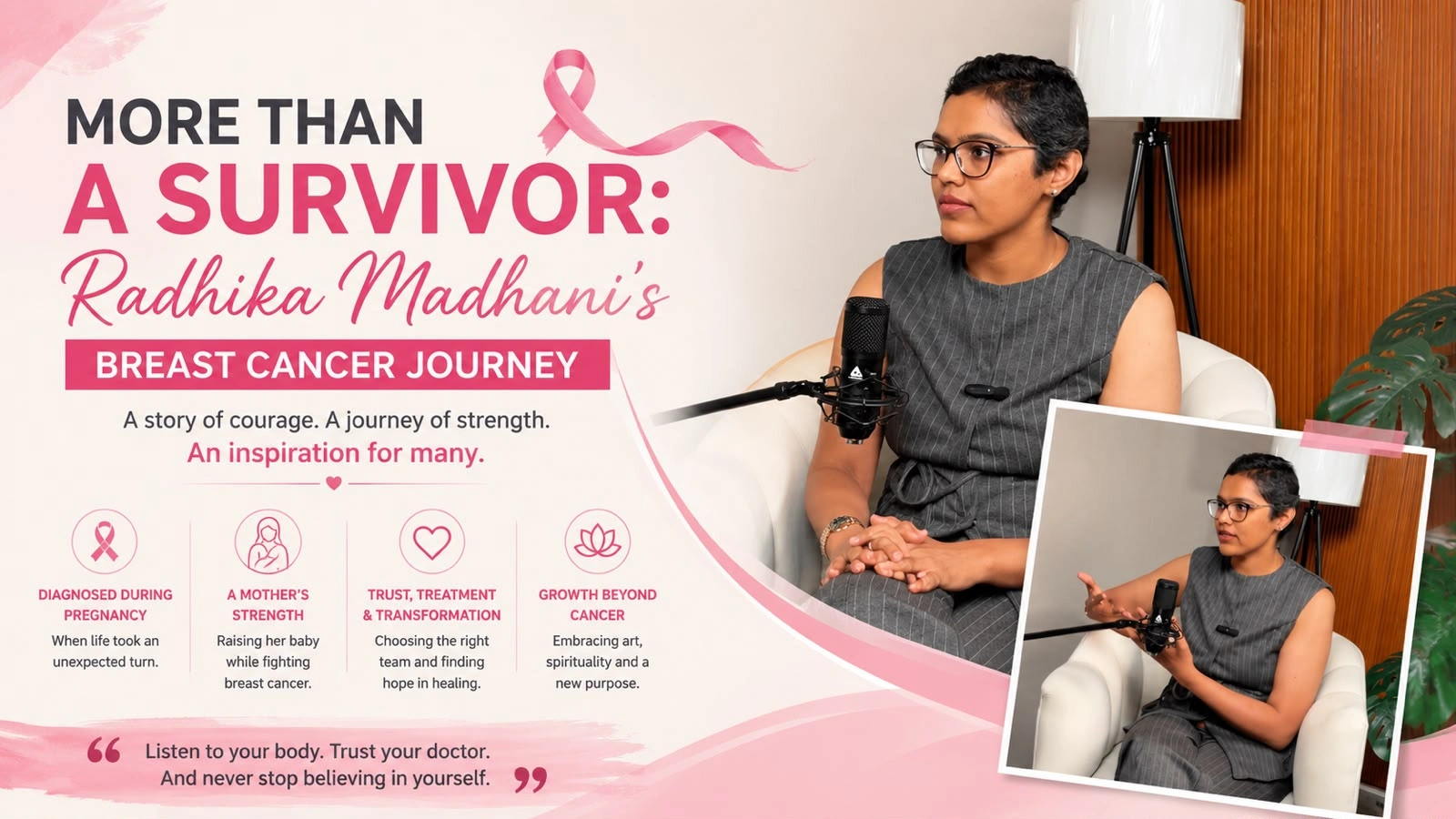
There are moments in life that divide everything into two chapters: before and after. For Radhika Madhani, a Chartered Accountant from Mumbai, that moment came during one of the happiest phases of her life—pregnancy. While preparing to welcome her first child, she was diagnosed with breast cancer, a diagnosis she never saw coming.
What started as a small lump became a diagnosis that would test not just her physical strength, but her courage, her faith, and her understanding of what it truly means to keep moving forward.
Today, Radhika is much more than a breast cancer survivor. She is an artist, a poet, a mother, a professional, and an ambassador of hope for countless people walking the same difficult path.
This is her story.
"Can Pregnancy and Breast Cancer Even Exist Together?"
Finding a lump was frightening enough. Finding one while pregnant felt almost impossible to process.
Like many people facing a life-changing diagnosis, Radhika did what most of us would probably do—she turned to the internet. Page after page only seemed to make the uncertainty worse.
“Will my baby be okay?”
“Can cancer and pregnancy coexist?”
“Will I survive?”
Every answer led to another question. Even medical consultations initially left her with uncertainty because pregnancy-associated breast cancer is relatively uncommon and often requires careful coordination between specialists.
Looking back today, Radhika smiles gently and offers one piece of advice she wishes someone had given her sooner: “Don’t let the internet become your doctor.” Instead, find the right specialist and ask the right questions.
The Four Words That Changed Everything
During one of her earliest consultations, Dr. Ashutosh Tondare said something remarkably simple.
“Listen to your body.”
At that moment, they sounded like ordinary words. Later, they became the foundation of her entire journey. Listening to her body had helped her notice the lump. Listening to her body would help her navigate treatment. And listening to the experts she trusted would help her regain confidence in every decision ahead. Sometimes, the simplest advice carries the deepest meaning.
Choosing Trust Over Fear
Like many families, Radhika received endless suggestions after her diagnosis.
“Go to Mumbai.”
“Try Delhi.”
“You should look at hospitals abroad.”
Everyone wanted to help.
But after meeting Dr. Ashutosh Tondare at iBOCC Care, something changed.
She didn’t just receive a treatment plan. She found clarity. She found confidence. More importantly, she found a team that listened before they advised. By the end of her very first consultation, she already knew she didn’t want to continue searching. She wanted to begin healing. And she wanted to do it at iBOCC Care.
Looking back today, she says it was one of the best decisions she made.
A Mother First. A Patient Too.
One of the hardest parts of Radhika’s journey wasn’t chemotherapy.
It wasn’t surgery. It wasn’t losing her hair. It was wondering how her baby would be affected.
By the time her diagnosis was confirmed, her son was only two months old.
Questions filled every waking moment.
Could she breastfeed? Would treatment affect her child? Would her baby remember a mother who was constantly in hospitals? Every mother carries guilt.
Cancer simply gives that guilt a louder voice.
The Days Chemotherapy Took Away
Chemotherapy demanded more than physical strength. After every cycle, the medications left her deeply sedated. She remembers sleeping for hours while her baby cried nearby. As a mother, those moments hurt more than the treatment itself. Not because she didn’t want to comfort him but because her body simply couldn’t. Yet every time she regained her strength, she stepped back into motherhood without hesitation. She never missed his vaccinations.
She never stopped planning for him. She still went shopping for the little things that made motherhood special. Cancer had entered her life. She refused to let it define her motherhood.
Losing Hair, Not Confidence
Hair loss is often one of the most visible reminders of cancer treatment.
For many people, it’s also one of the most emotional.
Radhika chose to see it differently.
She embraced her bald head with remarkable confidence.
Most days, she wore it proudly. The wig only came out for occasions where she personally felt like wearing one—not because society expected it. Her confidence quietly challenged a misconception many patients carry: Hair grows back. Confidence can too.
Cancer Didn't Stop Her Career
Throughout treatment, Radhika continued working. Not because anyone expected her to.Because it helped her feel like herself.
Cancer had already changed so much. Work became one of the few things that reminded her she was still Radhika—not just a patient. She balanced hospital visits, treatment schedules, motherhood, and professional responsibilities with incredible resilience. It wasn’t about proving anything. It was about preserving normalcy.
"Please Don't Treat Me Differently."
One of the most honest parts of Radhika’s story has nothing to do with medicine. It has everything to do with people. She says cancer patients don’t always need sympathy. Sometimes they simply need normal conversations. They need friends who still laugh with them. Colleagues who still trust them. Family members who still see the same person. “I just wanted people to treat me the way they always had.” Because while cancer changes many things, it doesn’t erase who you are.
Trust the Doctor. Trust the Process.
If there’s one message Radhika repeats whenever she speaks to newly diagnosed patients, it’s this:
“Listen to your doctor.”
There will always be opinions.
Relatives. Neighbours. Internet articles. Social media.
Everyone will have advice.
But successful treatment begins with trusting the team caring for you. Instead of asking, “Why me?” She slowly shifted towards asking, “What can I do to make my treatment more effective?” That change in mindset transformed her journey.
Cancer Changed Her Life—In Unexpected Ways
No one chooses cancer.But Radhika believes every experience leaves us with something.
For her, cancer became a turning point. She grew spiritually. She discovered deeper gratitude. She found new meaning in art and poetry. She became more intentional about life. Today, she describes herself as someone who has experienced nearly twice the personal growth she imagined possible before her diagnosis.
Not because cancer was a gift. But because healing taught her how precious ordinary life truly is.
A Story That Continues to Inspire
Today, Radhika Madhani proudly shares her story so that another woman facing a frightening diagnosis doesn’t have to feel alone.
Her journey reminds us that breast cancer can arrive unexpectedly—even during pregnancy. That treatment is possible. That motherhood and cancer can coexist with the right medical care. And that hope often begins the moment we find people we trust. At iBOCC Care, stories like Radhika’s are powerful reminders that cancer treatment is about much more than removing a disease. It’s about helping people return to their lives—with strength, confidence, and hope.
Frequently Asked Questions (FAQs)
Can breast cancer occur during pregnancy?
Yes. Although uncommon, pregnancy-associated breast cancer can occur during pregnancy or shortly after childbirth. Early evaluation by an experienced multidisciplinary team is essential.
Is breast cancer treatment possible during pregnancy?
Depending on the stage of pregnancy and the type of cancer, certain treatments may be safely planned. Every case requires an individualized approach under specialist care.
Can women with breast cancer care for their baby during treatment?
Many women continue parenting throughout treatment, although certain therapies can make daily activities challenging. Family support and guidance from the treating team play an important role.
Why is choosing the right cancer specialist important?
An experienced oncology team can provide evidence-based treatment, coordinate care across specialties, answer questions clearly, and support patients through every stage of their journey.
What is the most important lesson from Radhika’s journey?
Trust your doctor, listen to your body, seek timely medical evaluation, and remember that a cancer diagnosis does not define who you are.
Disclaimer
Readers should not treat any information in this blog as medical advice for their condition. It is very important that an in-person consultation be conducted with an expert before taking any medication or treatment.