Hair Loss During Breast Cancer Treatment: Causes, Timeline & Recovery
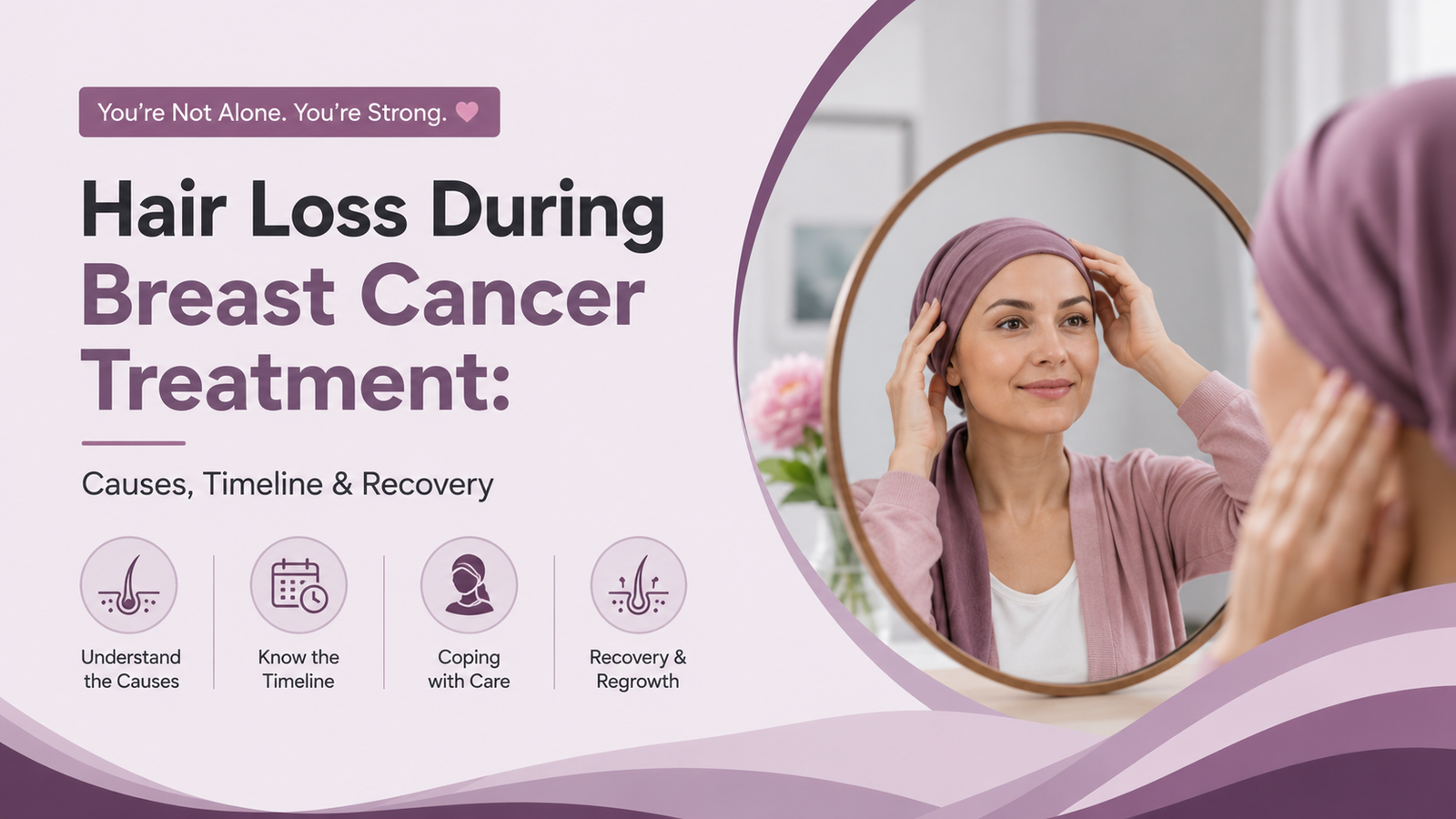
“Will I lose my hair?”
It’s one of the first questions many women ask after learning they’ll need treatment for breast cancer. And honestly, it’s a question that deserves more attention than it often gets.
Because this isn’t just about hair.
It’s about looking in the mirror and wondering if you’ll still recognize yourself. It’s about telling your children why you look different. It’s about walking into work, meeting friends, or simply stepping outside without feeling like your diagnosis is written all over your face.
If these thoughts have crossed your mind, you’re not alone.
The good news? Hair loss caused by breast cancer treatment is usually temporary. And knowing what to expect can make this part of the journey feel a little less uncertain.
Let’s talk about it.
First Things First: Does Breast Cancer Itself Cause Hair Loss?
This is one of the biggest myths surrounding breast cancer.
The answer is no.
Breast cancer itself does not usually cause hair loss.
Hair loss is most commonly a side effect of certain cancer treatments, especially chemotherapy. Some targeted therapies and hormonal treatments may also cause hair thinning, but they don’t typically lead to complete hair loss.
Understanding the difference is important because it helps set realistic expectations before treatment begins.
Why Does Chemotherapy Cause Hair Loss?
Think of chemotherapy as a treatment that’s designed to attack rapidly dividing cells.
Cancer cells divide quickly, which is exactly why chemotherapy is effective against them.
But here’s the catch—your hair follicles also contain some of the fastest-growing cells in your body.
Chemotherapy can’t always tell the difference between cancer cells and healthy fast-growing cells. So while it’s targeting the cancer, it may also affect your hair follicles, leading to hair loss.
This is why hair loss is considered a side effect of treatment, not the disease itself.
Will Everyone Undergoing Breast Cancer Treatment Lose Their Hair?
Not necessarily.
It depends on the type of treatment you’re receiving.
Chemotherapy
Many chemotherapy drugs used to treat breast cancer can cause partial or complete hair loss.
Targeted Therapy
Some targeted therapies may cause hair thinning rather than complete hair loss.
Hormone Therapy
Hormonal treatments usually do not cause complete baldness but may lead to gradual hair thinning in some women.
Radiation Therapy
Radiation therapy only affects the area being treated. If radiation is directed at the breast, it generally does not cause hair loss on the scalp.
Every treatment plan is different, which is why it’s important to discuss possible side effects with your oncologist before treatment begins.
When Does Hair Loss Usually Start?
One of the most common Google searches is:
“When will I start losing my hair after chemotherapy?”
For most patients, hair loss begins around 2 to 4 weeks after the first chemotherapy session.
Some people notice:
- More hair on the pillow
- Hair coming out while brushing
- Increased shedding during a shower
- Hair collecting on clothes
It usually happens gradually at first before becoming more noticeable.
Will I Lose All My Hair?
It varies from person to person.
Some women experience:
- Mild thinning
- Patchy hair loss
- Significant hair loss
- Complete scalp hair loss
Depending on the chemotherapy drugs being used, you may also notice loss of:
- Eyebrows
- Eyelashes
- Facial hair
- Underarm hair
- Body hair
Although this can feel distressing, it’s important to remember that this phase is usually temporary.
Can Hair Loss Be Prevented?
This is another question we hear often.
Unfortunately, there is no guaranteed way to completely prevent chemotherapy-related hair loss.
However, some patients may benefit from scalp cooling (cold cap therapy).
During chemotherapy, specially designed cooling caps lower the temperature of the scalp. This reduces blood flow to the hair follicles, which may decrease the amount of chemotherapy reaching them.
Scalp cooling doesn’t work for everyone, and its effectiveness depends on the type of chemotherapy being used.
Your oncology team can help determine whether it’s an appropriate option for you.
Should I Cut My Hair Before Chemotherapy?
Many women choose to cut their hair shorter before treatment begins.
Not because it’s medically necessary—but because it can make the transition feel more manageable.
Watching long strands fall out can sometimes be more emotionally difficult than adjusting to a shorter hairstyle.
Some women even choose to shave their heads once hair loss begins, giving themselves a sense of control during a time when so much feels uncertain.
There is no right or wrong choice.
Do what feels right for you.
Taking Care of Your Scalp During Treatment
Your scalp may become more sensitive while you’re undergoing chemotherapy.
A few simple steps can help:
- Use a mild shampoo.
- Avoid harsh chemical treatments.
- Limit heat styling.
- Pat your hair dry instead of rubbing it.
- Protect your scalp from direct sunlight.
- Wear a soft scarf or cap if your scalp feels sensitive.
- Moisturize your scalp if recommended by your doctor.
Gentle care goes a long way.
Wigs, Scarves or Going Natural—There Is No Right Answer
Some women feel more comfortable wearing a wig.
Others enjoy experimenting with scarves, hats, or turbans.
Some decide not to cover their heads at all.
Every choice is equally valid.
Hair loss doesn’t define your strength, your femininity, or your identity.
Many patients say that once treatment begins, they realize their focus shifts from how they look to what they’re fighting for—the chance to recover and move forward.
When Does Hair Grow Back After Chemotherapy?
Perhaps the most reassuring question of all:
“Will my hair grow back?”
For most women, the answer is yes.
Hair usually begins to grow back around 1 to 3 months after completing chemotherapy.
Initially, you may notice:
- Soft fuzz
- Fine baby hair
- Slower growth than expected
Over the next several months, hair gradually becomes thicker.
Why Does My Hair Look Different After Chemotherapy?
Many patients are surprised when their new hair doesn’t look exactly like it did before treatment.
You might notice:
- Curly hair instead of straight hair
- Straighter hair instead of curly
- Different colour
- Softer texture
- Slightly thicker or finer hair
These changes are usually temporary, although for some people they may persist.
Every recovery journey is unique.
The Emotional Side of Hair Loss
Let’s be honest.
Hair loss isn’t simply a cosmetic issue.
For many women, it can feel like the moment when cancer becomes visible—not just to others, but to themselves.
It’s okay to grieve that change.
It’s okay to feel angry, anxious, or even scared.
But remember this:
Hair loss is often a sign that your treatment is doing what it’s meant to do—targeting rapidly growing cancer cells.
Your hair may leave for a while.
Your courage doesn’t.
Talking openly with your family, support groups, counsellors, or healthcare team can make this experience much easier to navigate.
A Few Myths Worth Clearing Up
Myth: Breast cancer causes hair loss.
Fact: Hair loss is usually caused by chemotherapy or certain cancer treatments—not breast cancer itself.
Myth: Hair will never grow back.
Fact: For most patients, hair begins growing back within a few months after chemotherapy ends.
Myth: Shaving your head helps hair grow back faster.
Fact: Shaving doesn’t affect the speed or quality of hair regrowth.
Myth: Natural oils or herbal remedies can prevent chemotherapy hair loss.
Fact: There is no scientific evidence that oils or home remedies can prevent treatment-related hair loss.
When Should You Speak to Your Oncologist?
Always let your oncology team know if you have concerns about:
- Hair loss
- Scalp irritation
- Severe itching
- Skin infections
- Emotional distress related to treatment
Supportive care is an important part of breast cancer treatment, and your team can guide you toward practical solutions and emotional support.
Looking Beyond the Mirror
One day, you’ll run your fingers through new hair.
It may feel softer.
It may curl differently.
It may even surprise you.
But by then, it won’t just represent hair growing back.
It will represent everything you’ve been through—and everything you’ve overcome.
Hair may be one part of your journey.
Healing is the bigger picture.
And that journey deserves compassion, support, and hope every step of the way.
Frequently Asked Questions (FAQs)
Does breast cancer itself cause hair loss?
No. Breast cancer does not usually cause hair loss. Hair loss is most commonly a side effect of chemotherapy and certain other cancer treatments.
When does hair loss start after chemotherapy?
Hair loss typically begins 2 to 4 weeks after the first chemotherapy session, although this varies depending on the medications used.
Will my hair grow back after chemotherapy?
Yes. For most patients, hair begins to regrow within 1 to 3 months after treatment ends, though texture and colour may initially be different.
Can chemotherapy hair loss be prevented?
There is no guaranteed way to prevent hair loss, but scalp cooling (cold cap therapy) may reduce hair loss for some patients receiving specific chemotherapy regimens.
Is it safe to colour or straighten my hair after chemotherapy?
It’s generally best to wait until your hair has grown back and your oncologist or dermatologist confirms that your scalp and hair are healthy enough for chemical treatments.
Final Thoughts
Hair loss may be one of the most visible side effects of breast cancer treatment, but it is also one of the most temporary. While it can be emotionally challenging, knowing what to expect and preparing for the journey can make a meaningful difference.
At i-BOCC, we believe that caring for someone with breast cancer means caring for the whole person—not just treating the disease. If you have questions about your treatment or its side effects, don’t hesitate to speak with your oncology team. We’re here to support you, every step of the way.
Disclaimer
Readers should not treat any information in this blog as medical advice for their condition. It is very important that an in-person consultation be conducted with an expert before taking any medication or treatment.