
HPV and Throat Cancer: Why Tobacco Isn’t the Only Risk Factor
When people hear “head and neck cancer,” one risk factor usually comes to mind:
Tobacco.
And for good reason.
Smoking and smokeless tobacco remain major risk factors for several head and neck cancers.
But there’s another side of the story that more people need to know.
HPV.
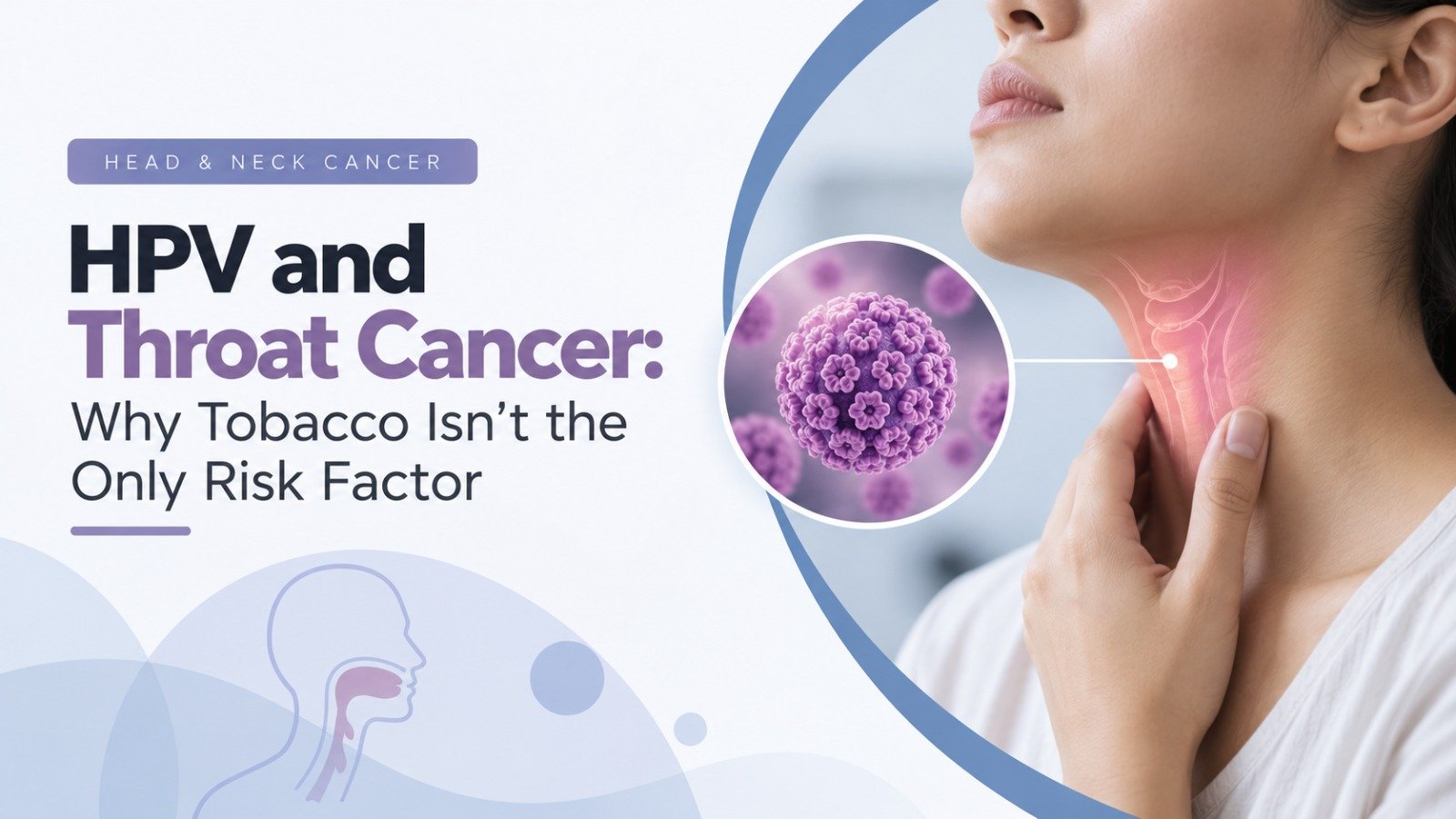
Human papillomavirus, commonly known as HPV, is associated with certain cancers of the throat, particularly cancers of the oropharynx, which includes areas such as the tonsils and base of the tongue.
What is HPV?
HPV is a very common virus.
Most HPV infections do not become cancer.
In many people, the immune system clears the infection naturally.
However, persistent infection with certain high-risk types of HPV can contribute to the development of cancer.
And this is particularly relevant when we talk about some throat cancers.
Does HPV cause all oral cancers?
No.
This is an important distinction.
HPV-related throat cancer and tobacco-related oral cancer are not the same thing.
HPV has a particularly strong association with cancers of the oropharynx.
Traditional oral cancers involving areas such as the mouth and oral cavity continue to have strong associations with tobacco and other established risk factors.
So saying “HPV causes mouth cancer” oversimplifies a much more complicated picture.
Can someone who doesn’t smoke still develop throat cancer?
Yes.
A person may never have smoked or chewed tobacco and still develop an HPV-associated oropharyngeal cancer.
This is one reason awareness is important.
At the same time, it doesn’t mean tobacco is no longer a concern.
It means that head and neck cancer has more than one pathway.
What symptoms should you watch for?
Symptoms depend on where the cancer develops.
They can include:
- A persistent sore throat
- Difficulty swallowing
- Pain while swallowing
- A persistent change in voice
- A lump in the neck
- Persistent ear pain without an obvious ear problem
- A sensation of something being stuck in the throat
- Unexplained weight loss
One particularly important symptom is an unexplained neck lump that doesn’t go away.
Sometimes the first sign of an oropharyngeal cancer isn’t a visible lesion in the mouth.
It may be a swollen lymph node in the neck.
Does HPV status matter when treating cancer?
It can.
HPV-positive and HPV-negative oropharyngeal cancers can behave differently.
HPV status may therefore contribute to understanding prognosis and planning treatment.
Modern head and neck oncology is increasingly moving towards risk-adapted treatment, where factors beyond simply the tumour’s location and size are considered.
Researchers are also studying biomarkers that may eventually help doctors monitor patients more precisely.
But one thing is important:
HPV-positive does not mean “no treatment needed.”
Cancer still needs proper diagnosis, staging and treatment.
Can HPV-related cancer be prevented?
HPV vaccination is an important cancer-prevention strategy.
The vaccine can protect against HPV types associated with several cancers.
Prevention, however, doesn’t replace awareness.
Persistent symptoms still need evaluation.
The bigger picture
For decades, conversations around head and neck cancer were dominated by smoking and tobacco.
Today, we’re learning that the story is more complex.
Different cancers have different causes.
Different tumours behave differently.
And two patients with a cancer in the same general region may not necessarily have the same disease biology.
That’s why modern cancer care isn’t simply about asking:
“Does this patient use tobacco?”
It’s about understanding the entire cancer profile.
Because the more we understand about the cancer, the more intelligently we can treat it.
Disclaimer
Readers should not treat any information in this blog as medical advice for their condition. It is very important that an in-person consultation be conducted with an expert before taking any medication or treatment.