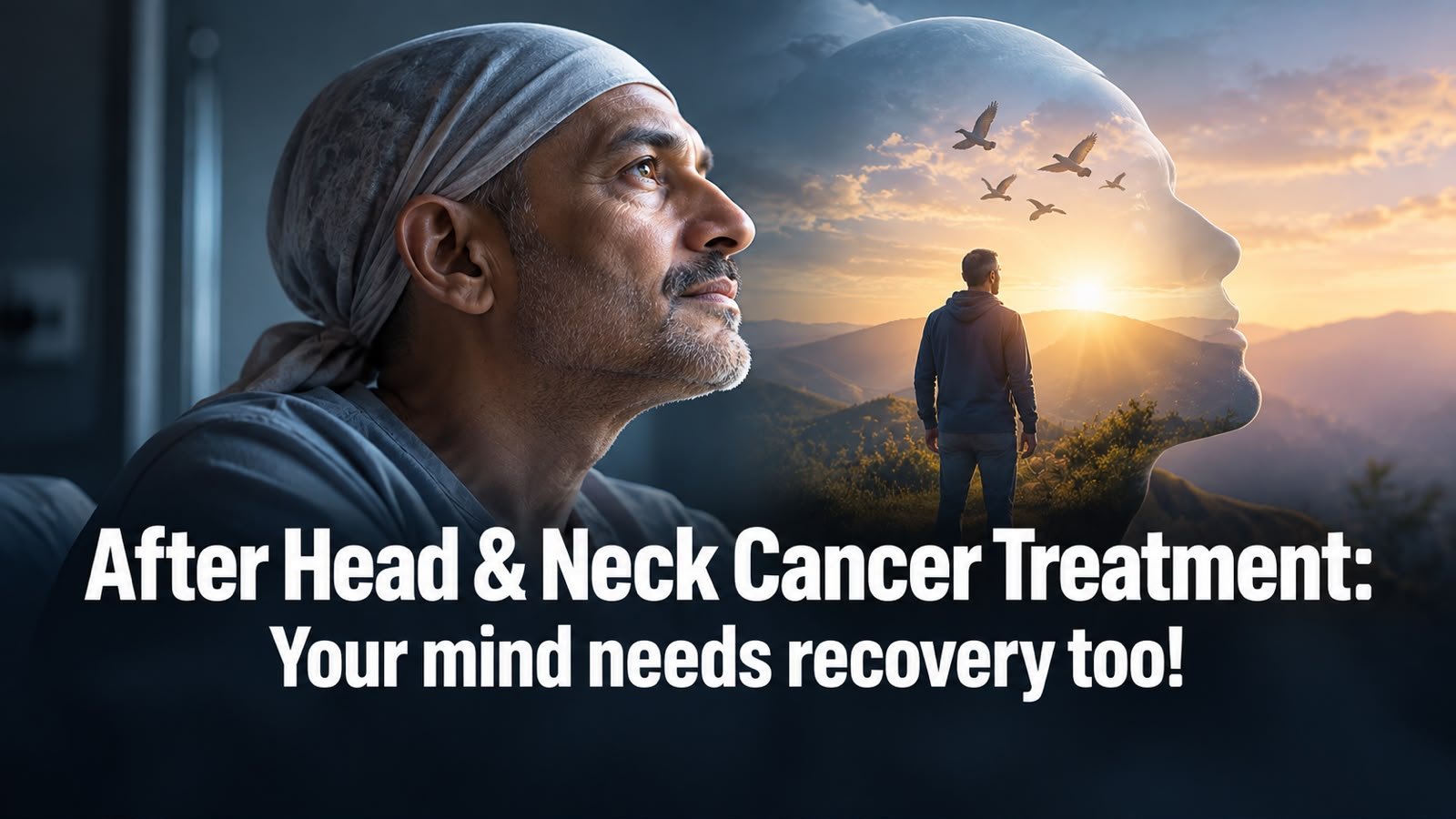
After Head & Neck Cancer Treatment: Your Mind Needs Recovery Too
“Your scans are clear. Treatment is over.”
For many people with head and neck cancer, these words bring enormous relief.
But they can also bring an unexpected question:
“Why don’t I feel normal yet?”
Finishing cancer treatment does not always mean that the emotional journey is finished. Surgery, radiation therapy, chemotherapy, changes in appearance, difficulty swallowing or speaking, fatigue and months of uncertainty can leave an emotional impact long after treatment ends.
And that is completely worth talking about.
The “Now What?” Phase After Cancer
During treatment, life can become very structured: hospital visits, scans, medicines, procedures and appointments.
Then suddenly, treatment ends.
Family members may celebrate. Friends may say, “You are cured now.”
But a head and neck cancer survivor may still be thinking:
- What if the cancer comes back?
- Is this pain normal?
- Will my face or voice ever feel the same?
- Can I eat normally again?
- Will people notice my scar?
- Can I return to work?
- What happens at my next scan?
This period is often called cancer survivorship. Emotional health and quality of life remain important parts of recovery, alongside regular medical follow-up.
When Fear Becomes Part of Everyday Life
One of the biggest emotional challenges after cancer treatment is the fear of cancer recurrence.
A headache, mouth ulcer, difficulty swallowing or unexplained fatigue can suddenly trigger the thought:
“Is my cancer back?”
Not every new symptom means recurrence. But persistent or concerning symptoms should always be discussed with your treating team rather than ignored or self-diagnosed.
Some survivors may also experience anxiety, depression, sleep problems, social withdrawal or cancer-related emotional distress.
And sometimes, these feelings appear months after treatment—not immediately.
That does not mean you are going backwards.
It means your mind is still processing what your body has been through.
Head & Neck Cancer Can Change More Than Health
Head and neck cancer can affect areas closely connected to identity and everyday communication.
Changes in the face, teeth, jaw, tongue or voice can affect body image, confidence, relationships, eating and social life.
Difficulty swallowing or speaking can make everyday activities feel unfamiliar.
Even returning to a restaurant, attending a family gathering or speaking in public can feel different after treatment.
That is why head and neck cancer rehabilitation may involve more than medical treatment alone.
Depending on individual needs, survivors may benefit from a speech and swallowing therapist, nutrition professional, physiotherapist, psychologist, psychiatrist, social worker or cancer support group.
Seeking psychological support is not a sign that someone is weak.
It is part of recovery.
What Can Help After Treatment?
Start by acknowledging what you have been through.
Keep your cancer follow-up appointments and discuss physical or emotional symptoms openly with your treating team.
Then slowly rebuild your routine.
That could mean returning to work, meeting friends, exercising when medically appropriate, improving nutrition, working on speech or swallowing, rebuilding confidence or simply doing something you enjoyed before your diagnosis.
And if fear, sadness, isolation or anxiety begins interfering with everyday life, ask for professional help.
You do not have to wait until things become overwhelming.
Recovery Is Not Just About Being Cancer-Free
Being declared free of active cancer is an important milestone.
But healing can continue long after the last treatment.
Your body may need rehabilitation.
Your relationships may need adjustment.
And your mind may need time, support and space to process everything that happened.
Head and neck cancer recovery is not just about surviving treatment. It is about rebuilding a life that feels like yours again.
If you or someone you love is struggling emotionally after head and neck cancer treatment, speak with the treating cancer team and ask about appropriate psychological or supportive-care services.
Disclaimer
Readers should not treat any information in this blog as medical advice for their condition. It is very important that an in-person consultation be conducted with an expert before taking any medication or treatment.